
JCL Landscape Services
University Park Retaining Wall Contractors
JCL Landscape Services is a retaining wall and pool removal specialist serving the Dallas–Fort Worth metroplex since 2006.
Engineered retaining wall replacement and new-build service for University Park homeowners dealing with a leaning, bowing, or failing wall.
- Failing railroad-tie wall replacement
- New tiered systems for slopes
- Engineered for expansive Dallas County clay
Get Your Free Estimate
 4.9out of 5 on Google Reviewson Google115 Google reviews
Trust & Credentials
4.9out of 5 on Google Reviewson Google115 Google reviews- 5,000+ Completed retaining wall and pool-removal projects
- 4.9 stars Google rating across 115 reviews
- A+ BBB accreditation rating
- 5-year Workmanship warranty on every retaining wall
- Since 2006 In continuous operation
Serving University Park, TX
A retaining wall in University Park rarely fails all at once. It's a section of railroad tie that's gone spongy at ground level, a cap stone that's rotated out of alignment, or a low corner of the yard that holds water for days after a storm. Homeowners usually notice it during a routine walk around the property, not because anyone warned them it was coming.
The decision that follows is whether to patch what's there or replace it outright — and whether the replacement needs to be engineered differently than whatever was built decades ago. Serving University Park, TX in Dallas County, along with neighboring Dallas, TX and Highland Park, TX, JCL evaluates the existing wall, the soil behind it, and the drainage path before recommending a fix.
JCL has completed more than 5,000 retaining wall and pool-removal projects for DFW property owners since 2006.
The First Signs a University Park Wall Is Losing the Fight
Most calls start with something visible but easy to dismiss — a wall that used to sit flush against a slope now leans a few degrees forward, or a joint between stones has opened up enough to see daylight through it. Railroad-tie walls tend to show rot at the base first, where the wood sits in contact with wet soil longest.
Other times the trigger isn't the wall itself but what's happening around it: a patch of yard that stays soft and muddy well after everyone else's has dried out, or water pooling against a foundation wall that never used to collect it. Both point to the same underlying issue — the wall behind it is no longer doing its job.
By the time cracks or visible leaning show up, the soil behind the wall has usually already shifted enough to need more than a patch. That's the point most University Park homeowners decide it's time for an actual inspection rather than another season of watching it.
Why Dallas County Clay Is Hard on Older Retaining Walls
Dallas County sits on expansive clay that swells when it's wet and contracts hard when it dries out. That cycle repeats every year, and it puts constant pressure on anything holding back a slope — pressure that older walls, especially railroad-tie or unengineered block construction, weren't built to absorb.
A wall installed decades ago may have held for years simply because the soil hadn't moved enough yet to expose the weak point. Once it does, the failure tends to progress faster than homeowners expect, because the same clay that's pushing the wall out is also eroding the soil it's supposed to retain.
JCL designs every replacement wall — whether it's Milsap stone, Granbury stone, concrete block, or poured concrete — specifically for this clay's expansion and contraction cycle, rather than treating it as a standard fill-and-stack job. That's the difference between a wall that lasts and one that's back on the repair list in a few years.
Scheduling a University Park Estimate From JCL's Colleyville Base
University Park sits roughly 23 miles east of JCL's Colleyville base, a straight-line run that fits easily into a same-day or next-day estimate window. JCL's crews regularly work this side of Dallas County, along with neighboring Dallas, TX and Highland Park, TX, so scheduling isn't a logistical afterthought.
The estimate itself is done on-site: JCL looks at the failing wall, the grade behind it, and where water is moving before quoting a fix. That quote becomes the final price — no change orders once work begins.
Once a homeowner signs off, JCL handles the permit process required for the work, then schedules the build. Because the quote is locked in before the crew arrives, there's no renegotiation mid-project if the soil conditions turn out to be exactly what the estimate anticipated.
What a University Park Homeowner Loses by Waiting on a Wall Repair
A leaning wall doesn't stabilize on its own — each wet-dry cycle in Dallas County's clay adds more pressure to a structure that's already compromised. What starts as a cosmetic lean can progress into a section that fully gives way, taking part of the slope, a flower bed, or a section of yard with it.
Waiting also narrows the repair options. A wall caught early might only need a partial rebuild; one that's fully failed usually requires tearing out the entire structure and starting over, including whatever drainage work should have been part of the original build.
There's also the water itself to consider. A wall that's no longer holding back soil properly often redirects runoff somewhere it wasn't going before — toward a foundation, a neighbor's property line, or a low spot that didn't used to flood. The cost of the wall repair rarely stays isolated to just the wall.
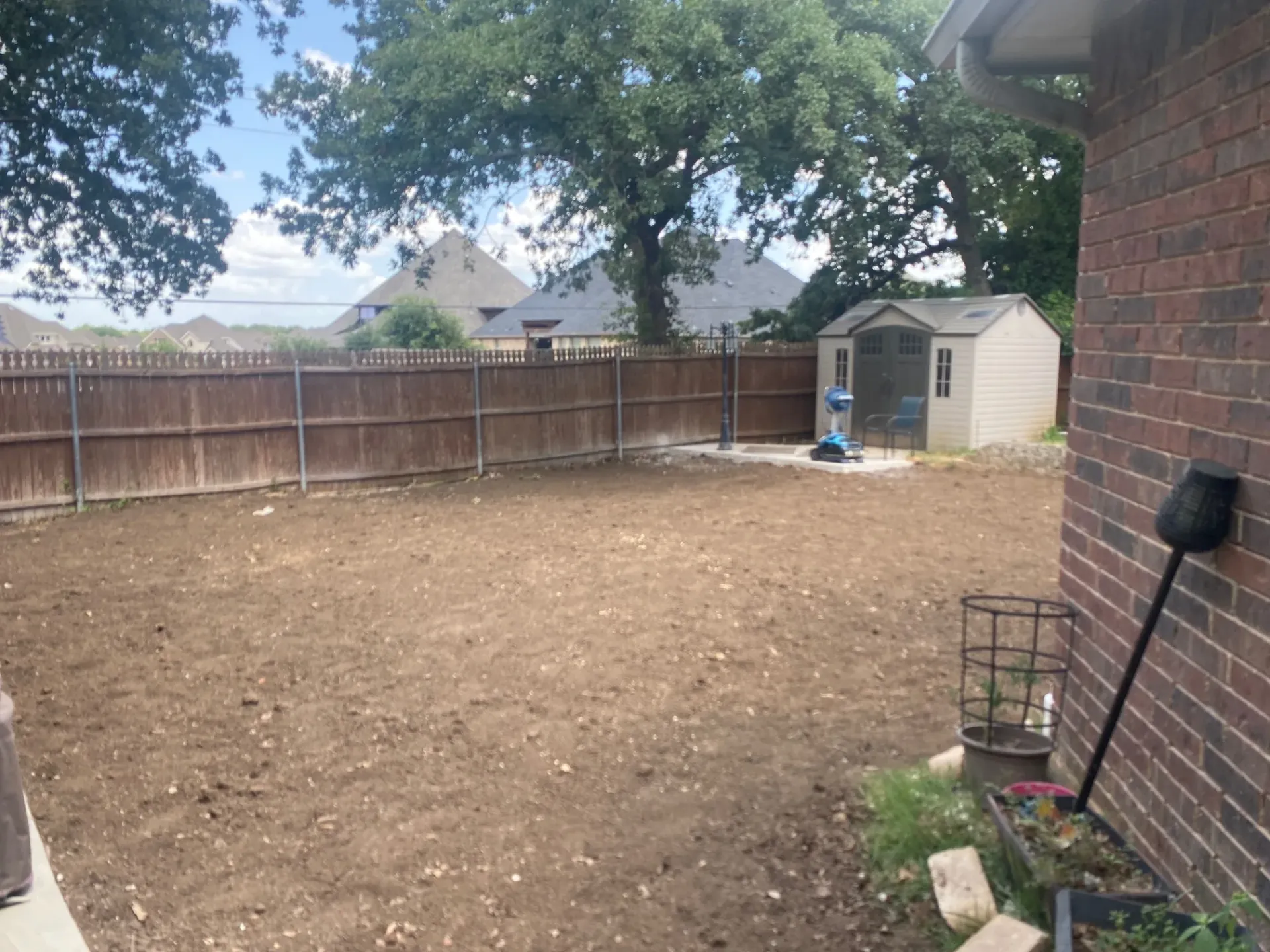
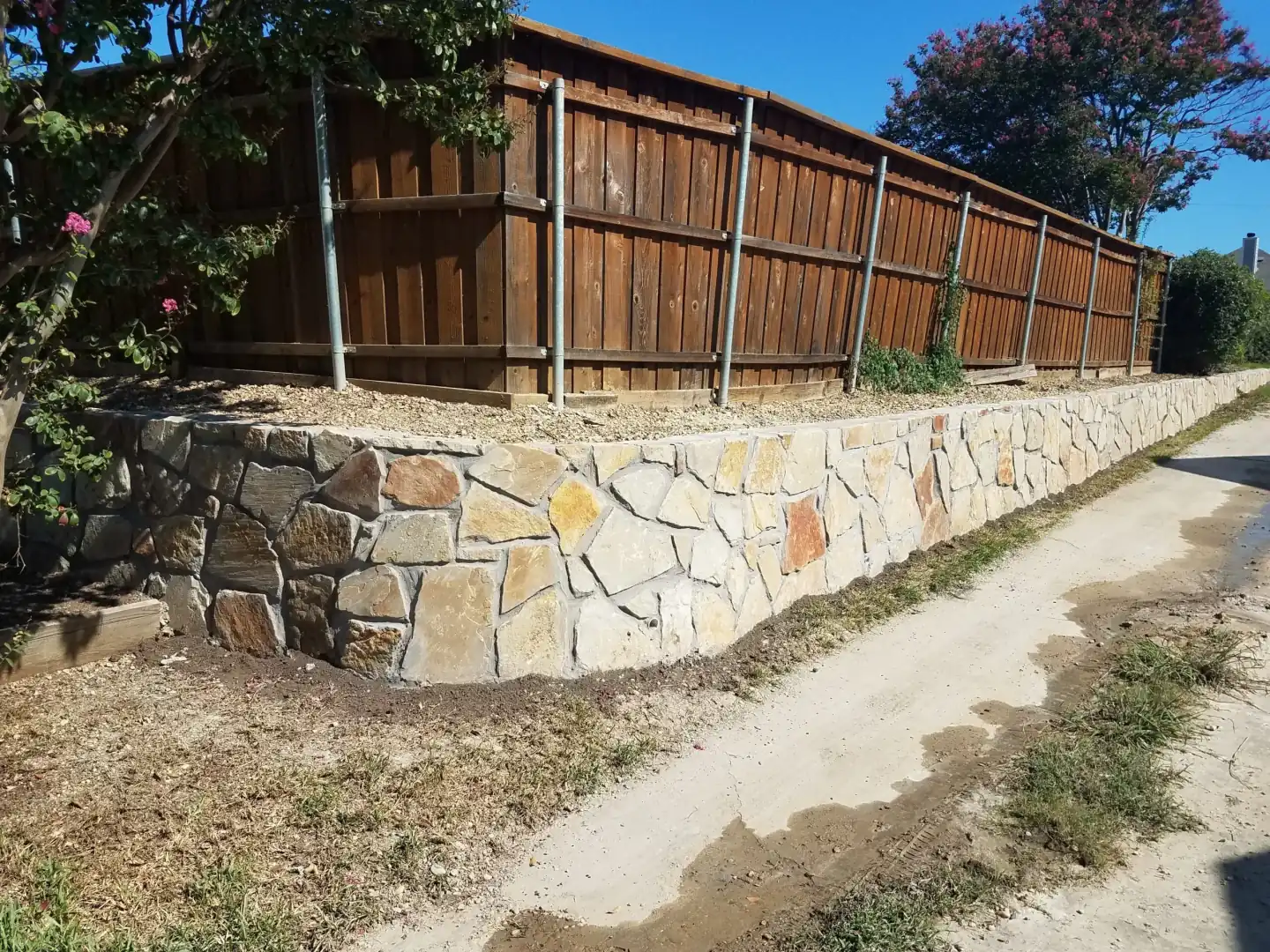
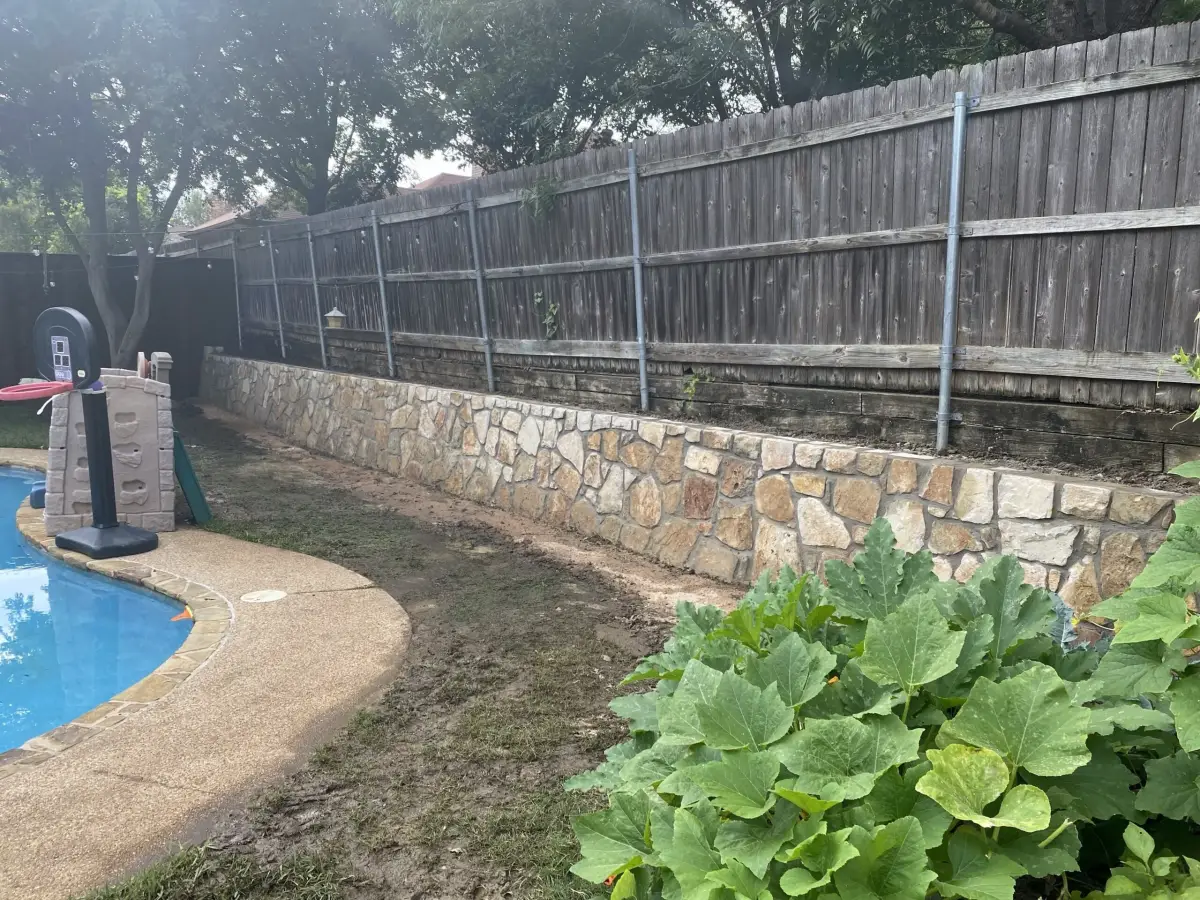
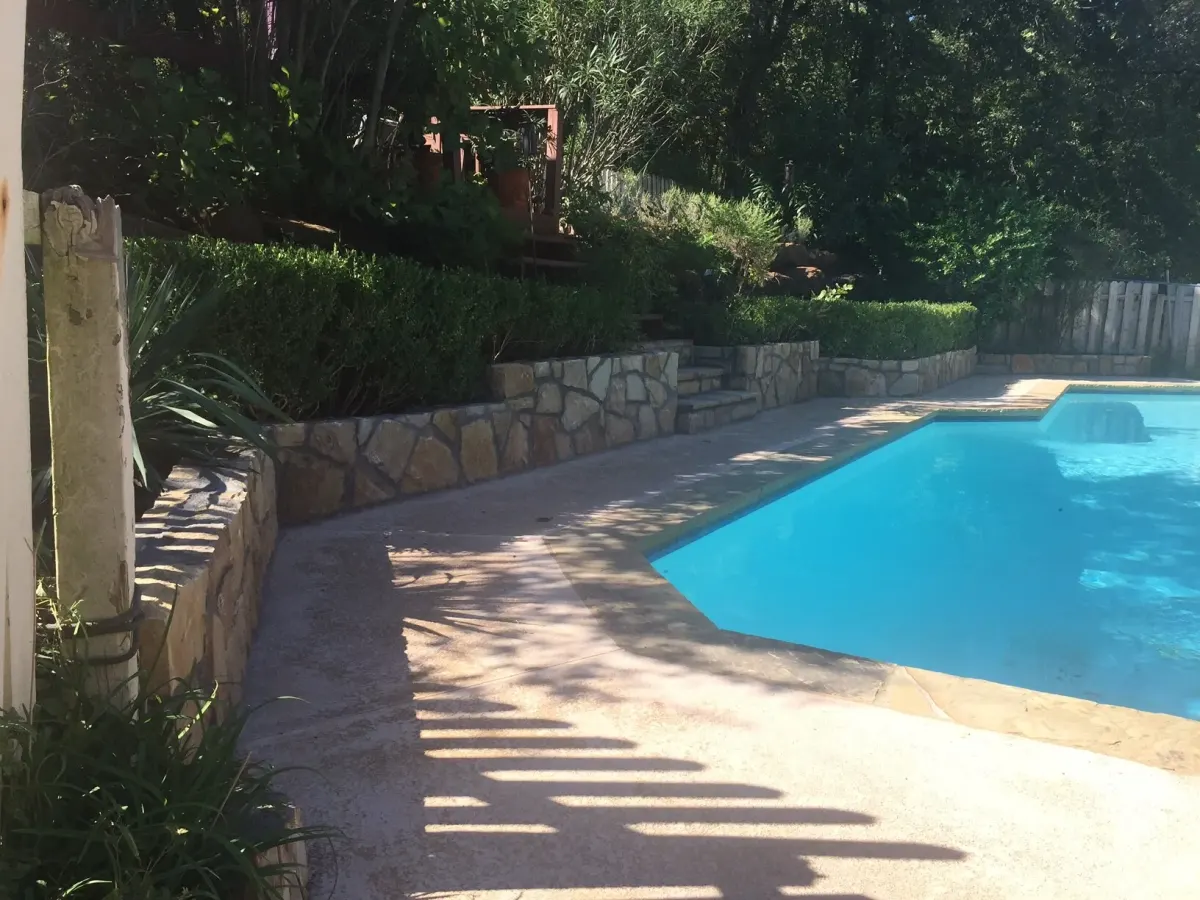
Recent Retaining Wall Services Projects
A selection of completed projects near University Park and across the Dallas–Fort Worth metroplex.





Quick answer
How much does a retaining wall replacement cost in University Park?
Cost depends on the wall's length, height, material — Milsap stone, Granbury stone, block, or poured concrete — and how much of the existing structure needs to come out first. JCL provides a free on-site estimate, usually same-day or next-day, and the number quoted is the number you pay, with no change orders once work starts.
Frequently Asked Questions
Common questions from University Park homeowners.
How much does a retaining wall replacement cost in University Park?
Cost depends on the wall's length, height, material — Milsap stone, Granbury stone, block, or poured concrete — and how much of the existing structure needs to come out first. JCL provides a free on-site estimate, usually same-day or next-day, and the number quoted is the number you pay, with no change orders once work starts.
Can a railroad-tie wall be repaired instead of fully replaced?
It depends on how far the failure has progressed. If only a section has rotted or shifted, a partial rebuild may be possible, but once the base wood has gone soft across most of the wall, a full replacement engineered for Dallas County's clay is usually the more durable route. JCL evaluates this during the free estimate before recommending either option.
Do I need a permit for a new retaining wall in University Park?
Permit requirements depend on the wall's height and location on the property. JCL obtains and manages whatever permits are required for the project, so homeowners don't have to navigate that process separately.
How long does a retaining wall project take from estimate to completion?
Timeline varies with the wall's size and whether it's a straightforward rebuild or a multi-tier system with added drainage work. JCL schedules the on-site estimate quickly — often the same day or the next — and lays out the build timeline before work begins so there are no surprises mid-project.
What's the difference between a wall built with railroad ties and one built with stone or block?
Railroad ties eventually rot at the base, especially in soil that holds moisture through Dallas County's clay cycles, and they weren't engineered for expansive soil pressure. Stone, block, and poured concrete walls, built to account for that same clay movement, hold their structure far longer.
Will a new retaining wall stop water from pooling in my yard?
A properly engineered wall addresses drainage as part of the design — not just the retaining function — which is often what a failing wall stopped doing. JCL evaluates where water is moving on the property during the estimate so the rebuild solves the erosion or standing-water issue, not just the leaning structure.
How is JCL different from a general landscaping company for wall work?
JCL works specifically on retaining walls and pool removal across DFW, not general landscaping, and has done so since 2006. Every wall is engineered for North Texas's expansive clay soil, backed by a 5-year workmanship warranty, and quoted with guaranteed pricing before work begins.
How do I get started if I think my wall is failing?
Call for a free on-site estimate — JCL typically schedules these same-day or next-day. A crew member inspects the wall, the soil behind it, and the drainage situation, then provides a locked-in quote before any work is scheduled.
Our Other Services
Retaining Wall Services and Pool Removal across the Dallas–Fort Worth metroplex.
About Our Retaining Wall Services Program
Recent Retaining Wall Projects Near University Park
Real completed jobs from our crews in and around University Park, with photos and project details.