
JCL Landscape Services
Justin Retaining Wall Contractors
JCL Landscape Services is a retaining wall and pool removal specialist serving the Dallas–Fort Worth metroplex since 2006.
Considering a retaining wall in Justin? Get an engineered fix for a leaning, failing, or eroding slope — not another patch.
- Built for Denton County's expansive clay soil
- All permits obtained and managed for you
- Free same-day or next-day on-site estimates
Get Your Free Estimate
 4.8out of 5 on Google Reviewson Google113 Google reviews
Trust & Credentials
4.8out of 5 on Google Reviewson Google113 Google reviews- 5,000+ Completed retaining wall and pool-removal projects
- 4.8 stars Google rating across 113 reviews
- A+ BBB accreditation rating
- 5-year Workmanship warranty on every retaining wall
- Since 2006 In continuous operation
Serving Justin, TX
A railroad-tie wall that's held a slope for a decade can start pushing outward with no warning beyond a shifted cap stone or a patch of grass that won't grow because water is pooling where it used to drain.
Some Justin calls start with a leaning wall along a side yard; others start with erosion eating into a slope after a heavy rain, or a homeowner planning a new patio or driveway who needs a tiered system to hold the grade. Whatever the entry point, the decision is the same: patch it again or replace it with something engineered to last.
JCL serves Justin, TX in Denton County, along with Northlake, TX, handling new construction, replacement of failing timber and railroad-tie walls, and multi-tier systems built from Milsap or Granbury stone, block, or poured concrete. Every wall is engineered for the expansive clay that moves through North Texas's wet-dry cycle, and every project includes the permits required to build it right.
JCL has completed more than 5,000 retaining wall and pool-removal projects for DFW property owners since 2006.
What a Homeowner Near Justin Notices Before Calling About a Wall
In Justin, the call about a retaining wall usually starts with something small: a railroad tie that's split at one end, a stone course that's shifted a few inches out of true, or a patch of yard where water sits after rain instead of draining away. Some walls are old enough that the timber has simply reached the end of its life. Others are newer but were never built to handle the grade change they're holding back.
Erosion is often the earlier warning sign, showing up as a slope losing soil each time it rains, exposed roots, or a low spot forming at the base of a wall. Left alone, that erosion undermines the wall itself, turning a cosmetic issue into a structural one. A homeowner planning a patio, driveway, or new grading also runs into the same question: whether the existing wall can be built on or needs to come out first.
Whatever the trigger, the decision facing a Justin homeowner is usually the same — patch the visible problem or replace the wall with one engineered to hold through the next wet season and the next dry one.
Why Denton County's Soil Turns a Small Crack Into a Bigger Problem
Denton County soil moves through the same wet-dry cycle as the rest of North Texas, expanding when it's saturated and pulling back hard when it dries out. A wall built without that cycle in mind — stacked stone with no drainage behind it, or railroad ties set without proper backfill — holds for a while and then starts failing all at once, usually after a stretch of heavy rain followed by a dry spell.
That's the pattern behind most of the failing walls JCL sees: not one dramatic storm, but repeated seasonal movement working a wall loose year after year. A railroad-tie wall installed years ago without engineering behind it is especially exposed to this cycle, since timber has no give and no drainage path once the soil starts to shift.
Any rebuild in Denton County also needs a permit before work starts, which is one more reason a straightforward-looking repair can take longer than a homeowner expects if it's handled without someone managing that step.
How JCL's Estimate and Build Process Reaches Justin and Northlake
JCL is based in Colleyville, roughly 14 miles southeast of Justin, and estimates for Justin and neighboring Northlake are scheduled the same way as anywhere else in the service area — usually a same-day or next-day on-site visit. A crew looks at the wall or slope in person, measures the grade, and talks through whether the fix is a straight rebuild, a tiered system, or added drainage behind the wall.
From there, the estimate covers material — Milsap or Granbury stone, block, or poured concrete — along with the permit that has to be filed before construction starts. Once permitting clears, the build itself moves on its own schedule, sized to the wall: a single retaining wall along a slope is a different job than a multi-tier system stepping down a steeper grade.
Because the distance from Colleyville is short, scheduling a Justin or Northlake estimate doesn't add the lead time some homeowners expect from a contractor traveling in from further across the metroplex.
Weighing a Patch Against a Rebuild for a Justin Property
A leaning or bowing wall doesn't stabilize on its own — it moves a little further with each rain cycle until the failure becomes visible from the yard instead of just up close. Waiting usually means the repair scope grows: what could have been a rebuild of one section becomes a full wall replacement once enough of the base has shifted or washed out.
Erosion works the same way. Soil lost behind a wall or along a slope doesn't come back, and the longer a drainage problem goes unaddressed, the more it can affect grading near a foundation, not just the wall itself.
For a Justin homeowner weighing options, the real comparison isn't patch versus rebuild pricing alone — it's whether a patch addresses the drainage and soil movement causing the failure in the first place, or just resets the clock until the next wet season finds the same weak point.
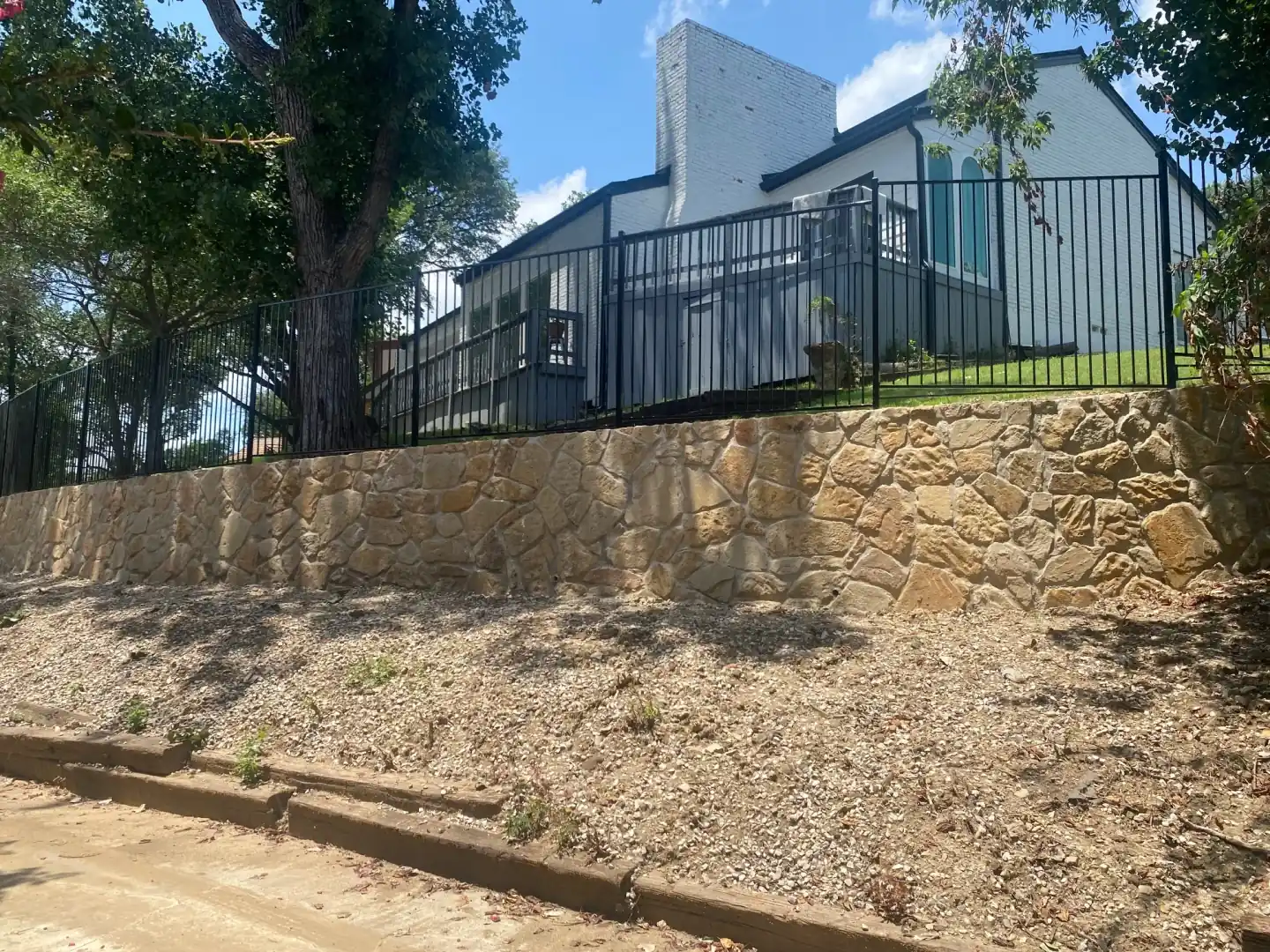
Recent Retaining Wall Services Projects
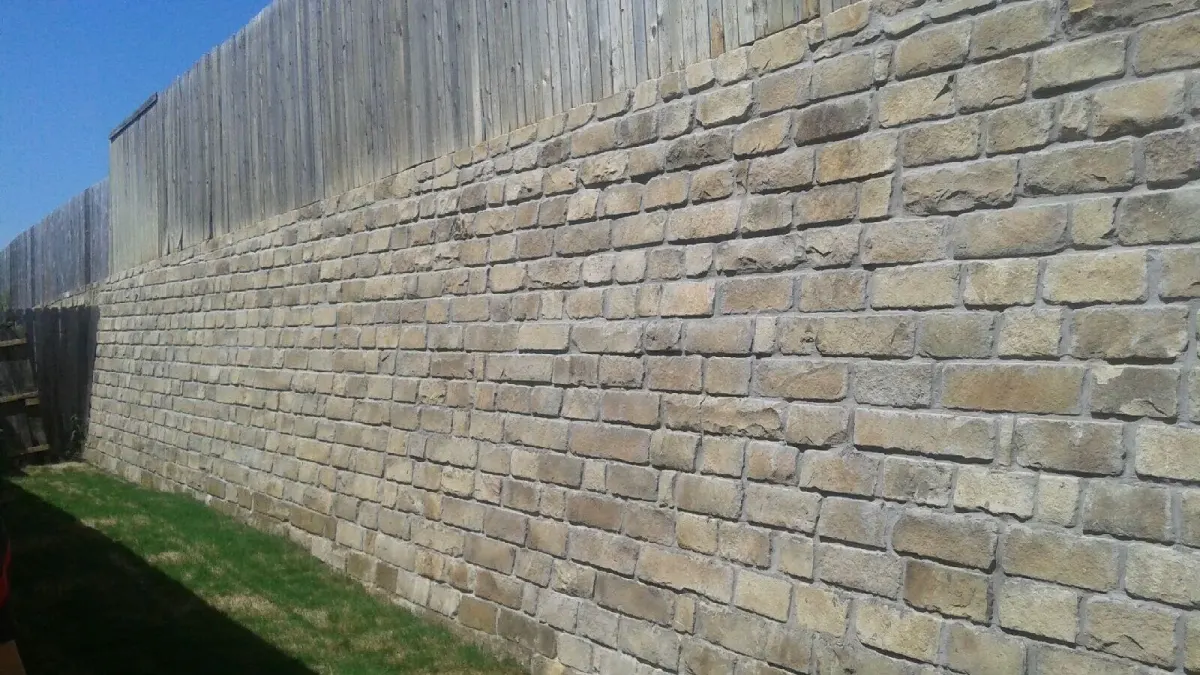
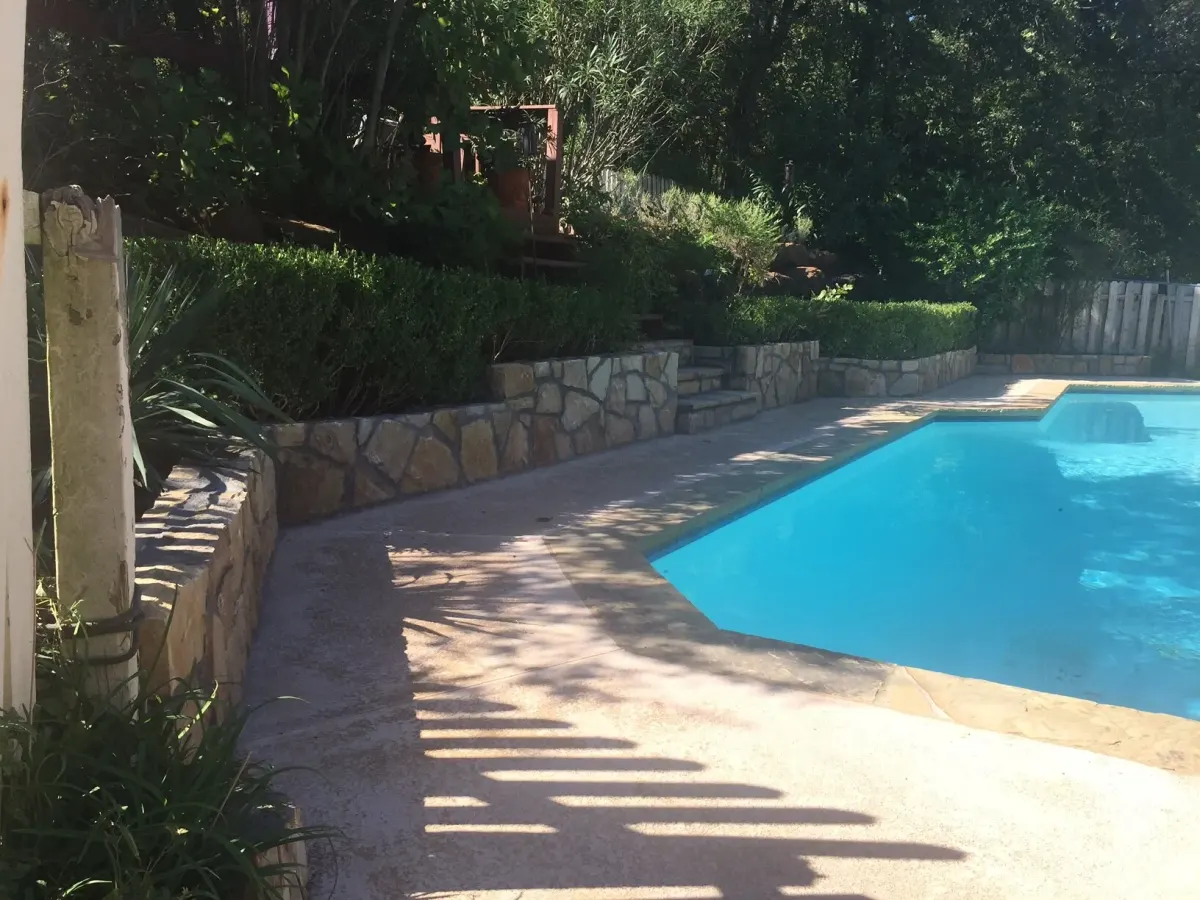
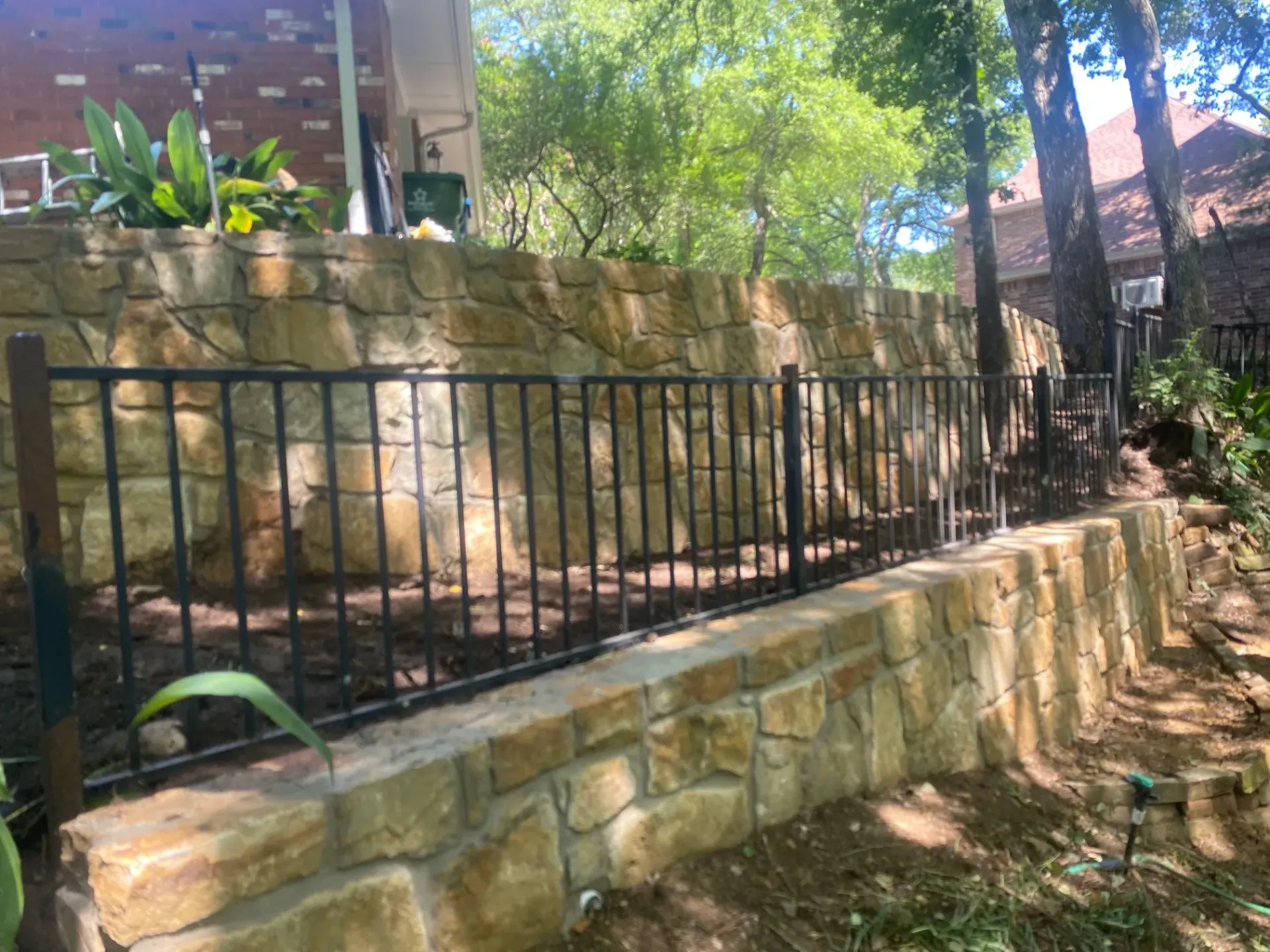
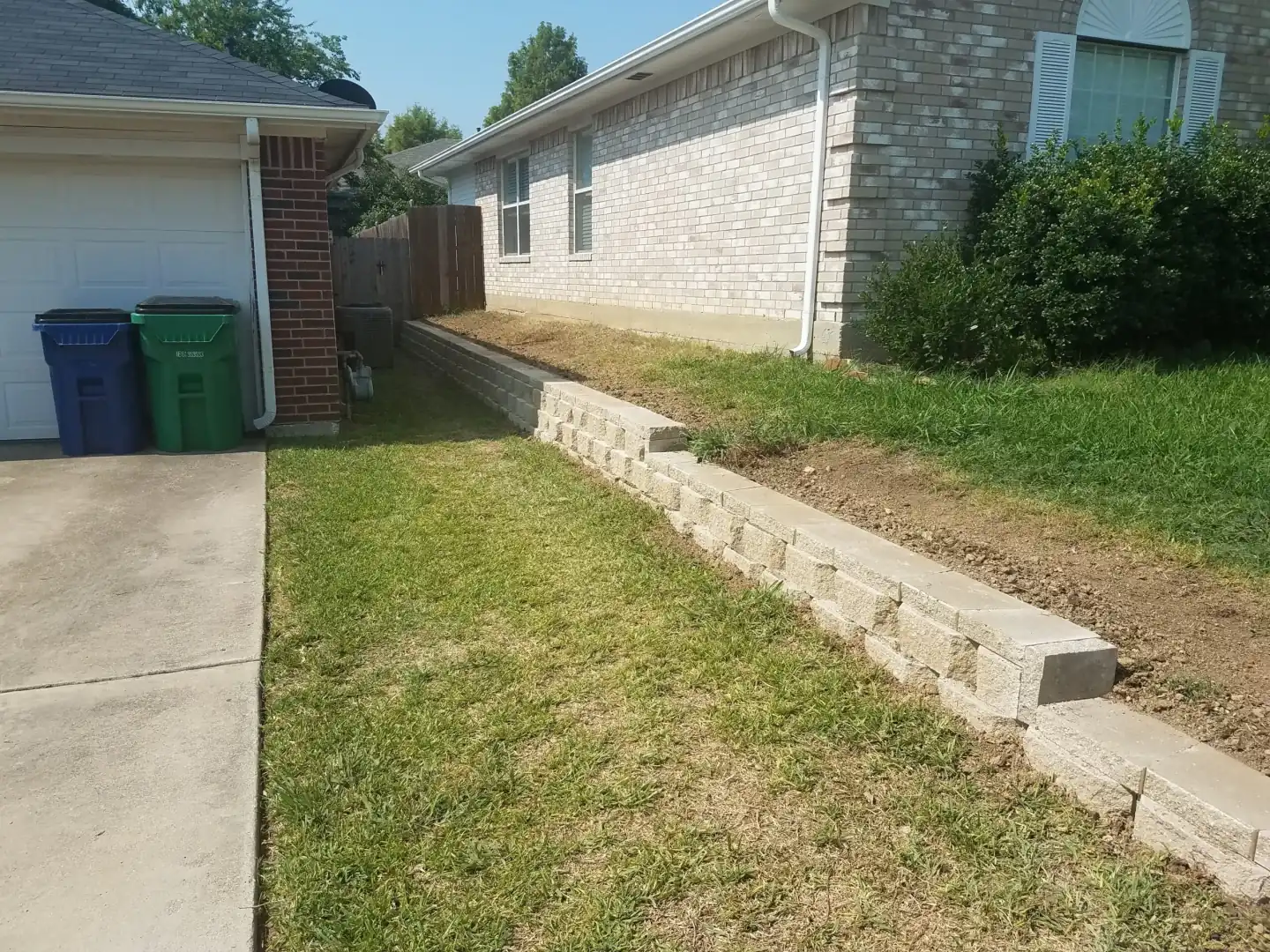
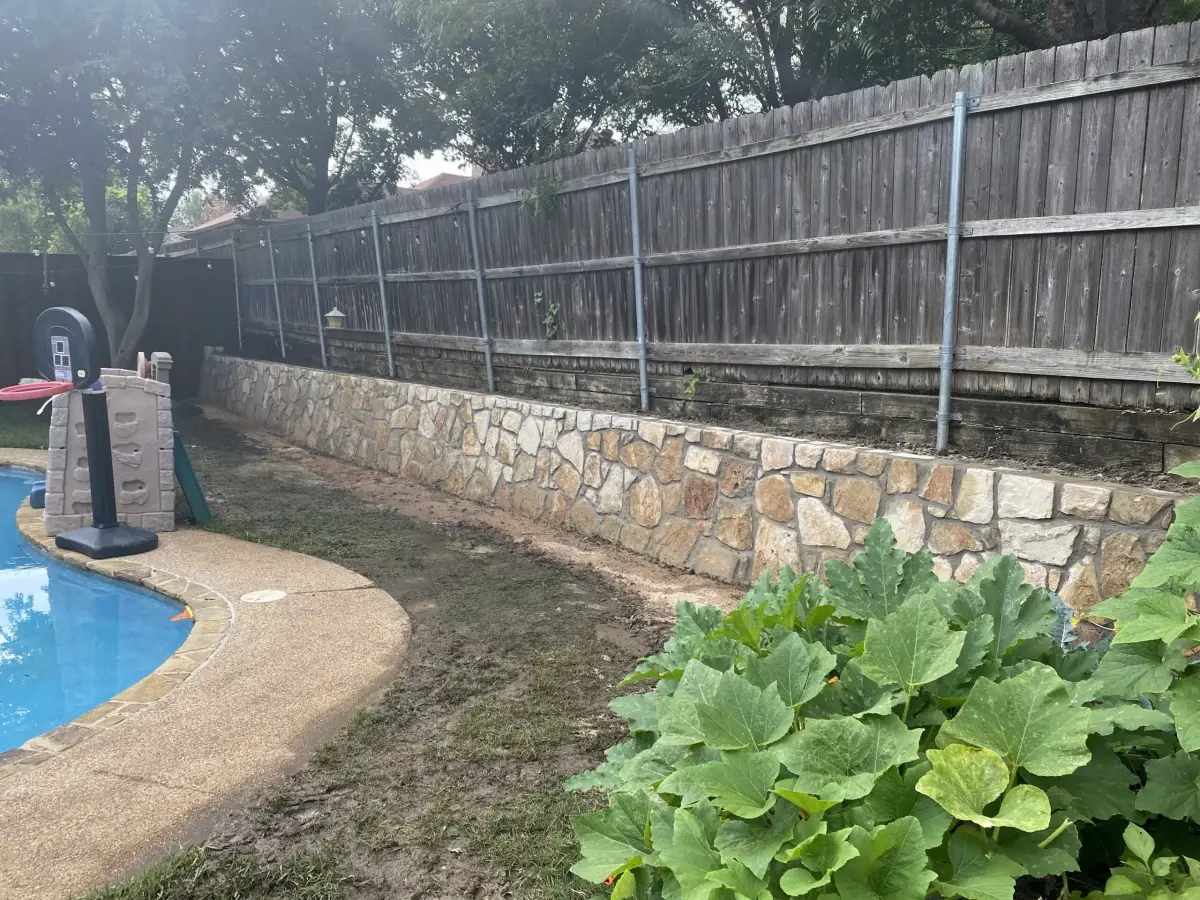
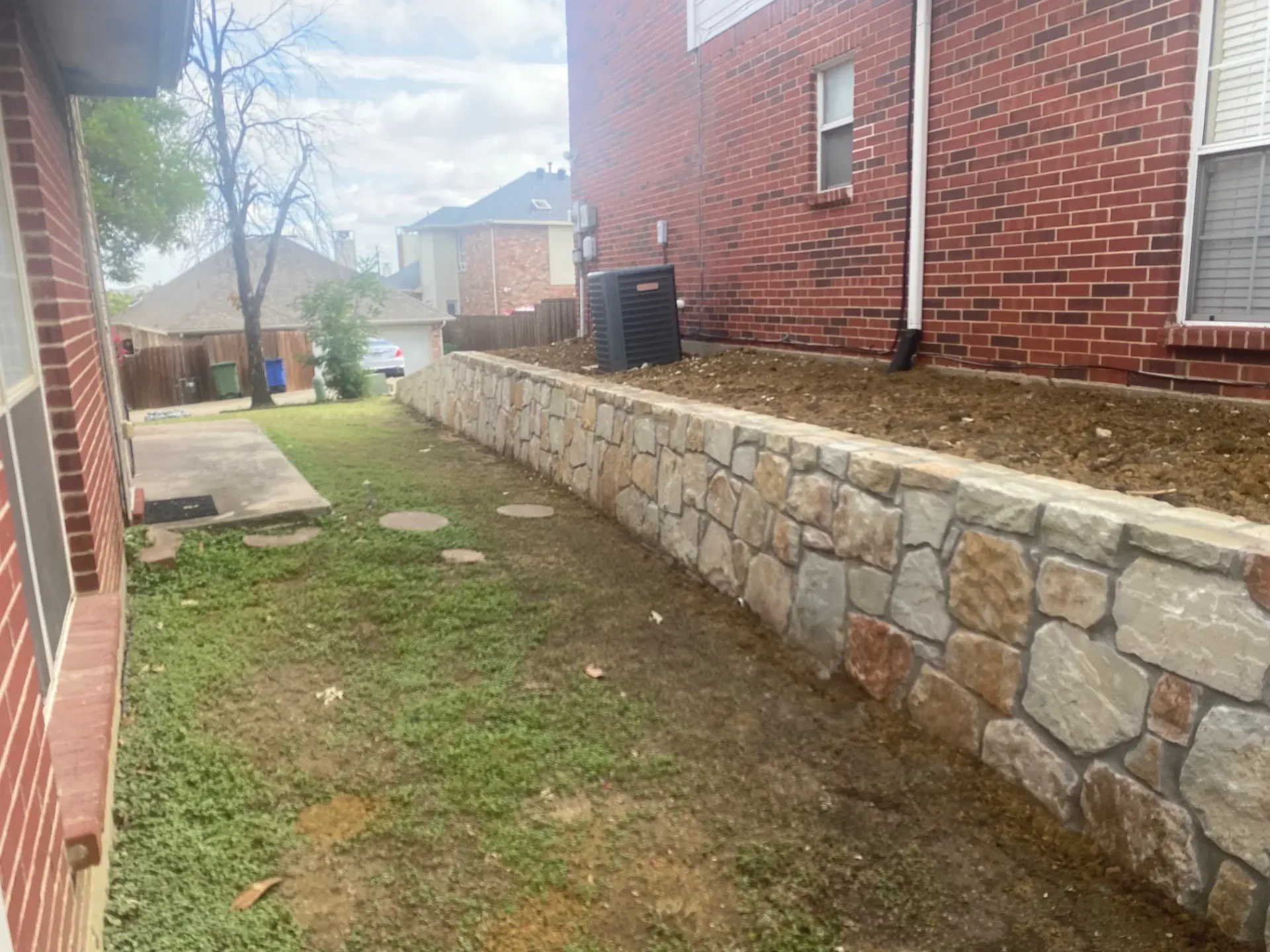
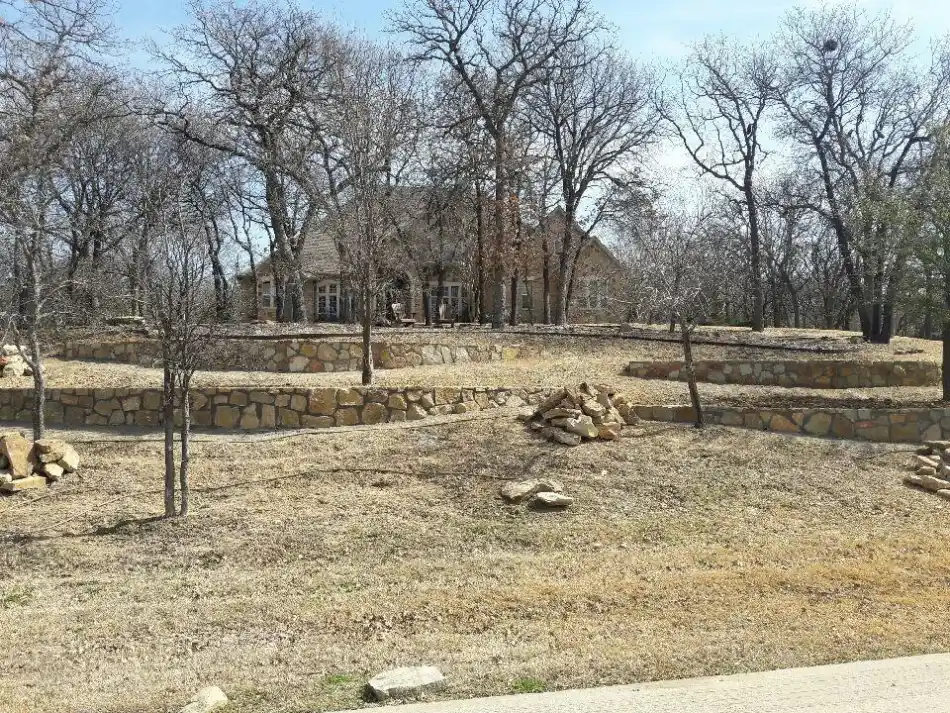
A selection of completed projects near Justin and across the Dallas–Fort Worth metroplex.
Quick answer
How much does a retaining wall cost in Justin, TX?
Cost depends on wall height, length, material choice, and how much of the old wall has to come out first. JCL prices each project after a free on-site estimate and quotes a guaranteed price, so there are no change-order surprises once work starts.
Frequently Asked Questions
Common questions from Justin homeowners.
How much does a retaining wall cost in Justin, TX?
Cost depends on wall height, length, material choice, and how much of the old wall has to come out first. JCL prices each project after a free on-site estimate and quotes a guaranteed price, so there are no change-order surprises once work starts.
How long does a retaining wall project take from estimate to completion?
Timing depends on the scope of the job and the permit process in Denton County, which has to clear before construction begins. A single wall rebuild moves faster than a multi-tier system or a job that also requires new drainage work behind the wall.
Do I need a permit to replace a retaining wall in Denton County?
Most retaining wall replacements and new builds in Denton County require a permit before construction starts. JCL handles obtaining and managing that permit as part of the project, so it doesn't fall on the homeowner to navigate.
Can a railroad-tie wall be replaced without tearing up the whole yard?
It depends on how far the failure has spread. If the tie wall is still holding its line but the timber has degraded, replacement can often stay contained to the wall footprint; if the base has shifted or eroded, more of the surrounding grade may need to be reworked to rebuild it correctly.
What's the difference between a single retaining wall and a tiered system?
A single wall holds back one grade change in one structure, while a tiered system breaks a steeper slope into stepped sections, each shorter and under less pressure than one tall wall would be. Tiered systems are typically the better fit where a slope is too steep for a single wall to hold safely.
How do I know if my wall needs a full rebuild instead of a patch?
Bowing, leaning, or a wall that's visibly out of line usually points to a structural problem that a patch won't fix, since the movement is coming from the soil behind the wall, not just the visible surface. An on-site look at the drainage and backfill behind the wall is the only reliable way to tell.
Does JCL serve Northlake as well as Justin?
Yes. JCL serves Justin and neighboring Northlake, TX, with the same estimate and build process used across the rest of the service area.
What material works best for a retaining wall in North Texas clay?
JCL builds with Milsap or Granbury stone, concrete block, or poured concrete, depending on the wall's height, the grade it's holding, and how the site drains. Each material is engineered with proper backfill and drainage so the wall can handle the expansion and contraction of North Texas clay.
Our Other Services
Retaining Wall Services and Pool Removal across the Dallas–Fort Worth metroplex.