JCL Landscape Services
Hurst Retaining Wall Contractors
JCL Landscape Services is a retaining wall and pool removal specialist serving the Dallas–Fort Worth metroplex since 2006.
A leaning railroad-tie wall or an eroding slope won't hold itself together — get a wall engineered for Tarrant County clay.
- Engineered walls built for Tarrant County clay
- Free estimates, same or next day
- 5-year warranty on every wall
Get Your Free Estimate
 4.8out of 5 on Google Reviewson Google113 Google reviews
Trust & Credentials
4.8out of 5 on Google Reviewson Google113 Google reviews- 5,000+ Completed retaining wall and pool-removal projects
- 4.8 stars Google rating across 113 reviews
- A+ BBB accreditation rating
- 5-year Workmanship warranty on every retaining wall
- Since 2006 In continuous operation
Serving Hurst, TX
A retaining wall that's begun to lean, bow, or drop railroad ties usually isn't a surprise — it's the outcome of years of seasonal ground movement finally reaching a tipping point. Some walls are original railroad-tie construction from years back; others are block or stone that's shifted after repeated wet-dry cycles. Homeowners in Hurst typically notice it first as a gap opening between tie and post, a section of block pulling forward, or a low spot in the yard that holds water longer than it used to.
Serving Hurst, TX in Tarrant County, JCL also works throughout Bedford, Colleyville, Euless, Fort Worth, and North Richland Hills, building and replacing walls under the same clay-soil conditions found across the area. The question isn't just whether to repair a leaning wall — it's whether the fix addresses the soil movement underneath, or only patches the symptom.
JCL has completed more than 5,000 retaining wall and pool-removal projects for DFW property owners since 2006.
How Ground Movement Beneath Hurst Properties Turns Into a Wall Problem
Tarrant County sits on expansive clay that swells when it's wet and contracts when it dries — and that cycle repeats every year across Hurst and neighboring Tarrant County communities like Bedford and Euless. A retaining wall built without engineering for that movement holds for a while, then starts to show it: a railroad tie bows outward, a stone course separates at the seam, or a section of block leans a few degrees more each season.
Drainage plays as big a role as the soil itself. Water pooling behind a wall after rain adds pressure the wall wasn't built to handle, and a wall that was fine for years can fail within a single wet season once that pressure builds. Older railroad-tie walls are particularly exposed — the wood degrades on its own timeline, and the clay behind it does the rest.
For a homeowner, the practical question is whether a repair addresses both the water and the soil, or just re-sets the wall in the same conditions that caused it to move in the first place.
Getting From a Phone Call to a Finished Wall in Hurst
JCL is based in Colleyville, a short six-mile trip from Hurst, which keeps scheduling straightforward for both the initial estimate and the build itself. A call usually gets a free, on-site estimate the same day or the next — someone looks at the wall, the slope, and the drainage pattern before any pricing is set.
Once a design is set, JCL handles the permit process required for retaining wall work in Hurst and Tarrant County, so the homeowner isn't the one tracking down paperwork. The crew then removes the failing wall — railroad tie, block, or stone — and rebuilds using material suited to the site: Milsap or Granbury stone, concrete block, or poured concrete. Material choice depends on the wall's height, the slope grade, and whether drainage needs to be built into the design — decisions made on-site rather than over the phone.
The same team and process cover Hurst, Bedford, Colleyville, Euless, Fort Worth, and North Richland Hills, so a homeowner comparing quotes near the Tarrant County line gets the same estimate-to-build sequence regardless of which side of that line the property sits on.
The Compounding Cost of Delaying a Failing Retaining Wall
A leaning wall rarely fixes itself, and waiting through another Tarrant County wet season tends to turn a repair into a full replacement. A railroad tie that's begun to soften keeps softening; a block wall that's shifted an inch keeps shifting, and the soil or landscaping it was holding back starts moving with it.
Left long enough, a failing wall can affect what's behind it — a patio, a fence line, a slope that feeds toward the foundation. A drainage problem behind the wall doesn't stay behind the wall — standing water finds the lowest point, which is often exactly where a homeowner doesn't want it: near a foundation, a walkway, or a fence line already showing wear.
Getting an estimate early, before a small lean becomes a collapse, is what keeps a Hurst wall project a defined, single-scope job instead of an open-ended one.
What to Confirm Before Signing Off on a Hurst Wall Project
Before signing a contract for wall work in Hurst, it's worth asking what the price actually includes: demolition and haul-off of the failing wall, permit costs, drainage work behind the new wall, and the material itself — Milsap stone, Granbury stone, block, or poured concrete. A quote that's silent on any of these tends to turn into a change order later.
It's also worth asking how the new wall accounts for the clay soil specifically — not as a general claim, but as part of the design: drainage behind the wall, base preparation, and the engineering that keeps a tiered or single wall from repeating the failure of the one it's replacing.
For a Hurst homeowner comparing bids, the practical test is whether the contractor is proposing a wall built for local conditions or simply rebuilding the same design that failed the first time. A written scope that names the wall type — new construction, tiered system, or replacement — along with the material and estimated footprint, gives a homeowner something concrete to compare across contractors.
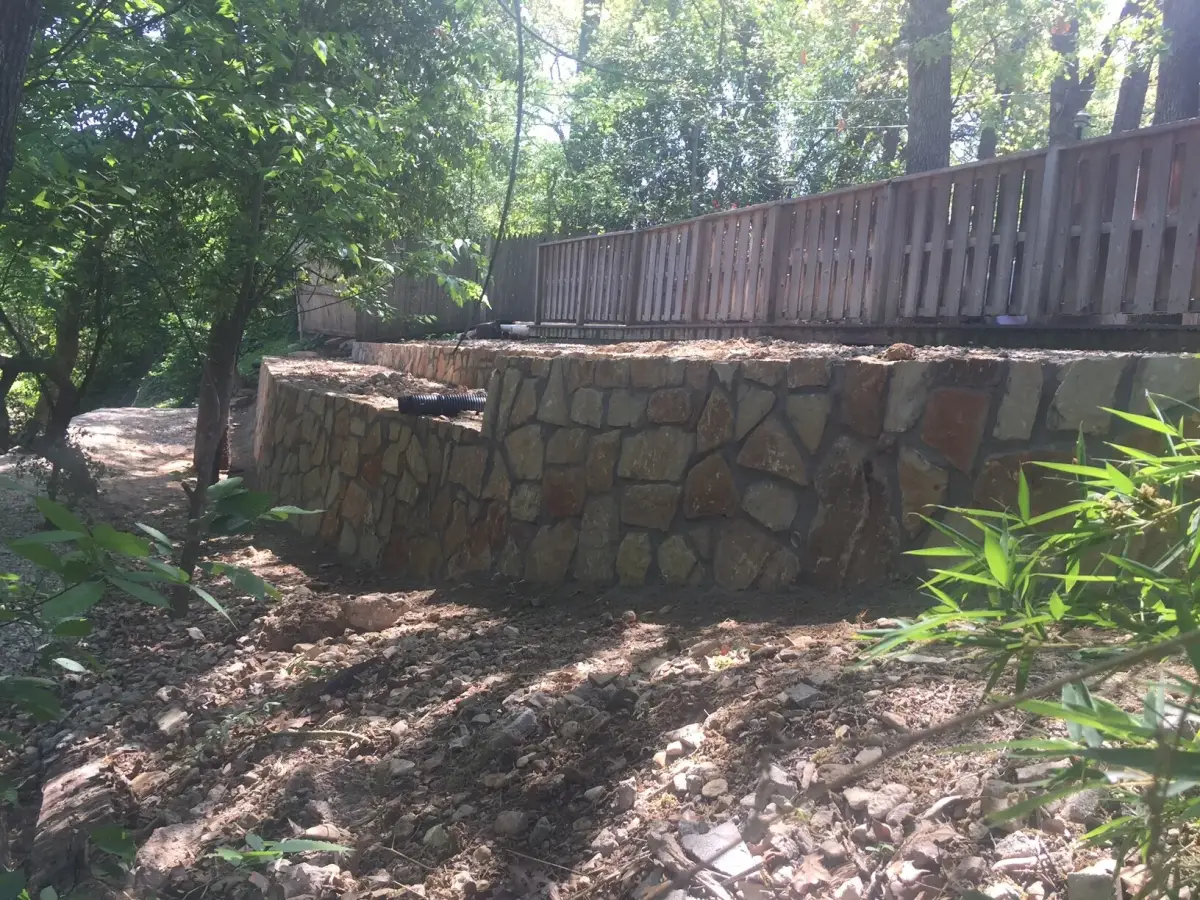
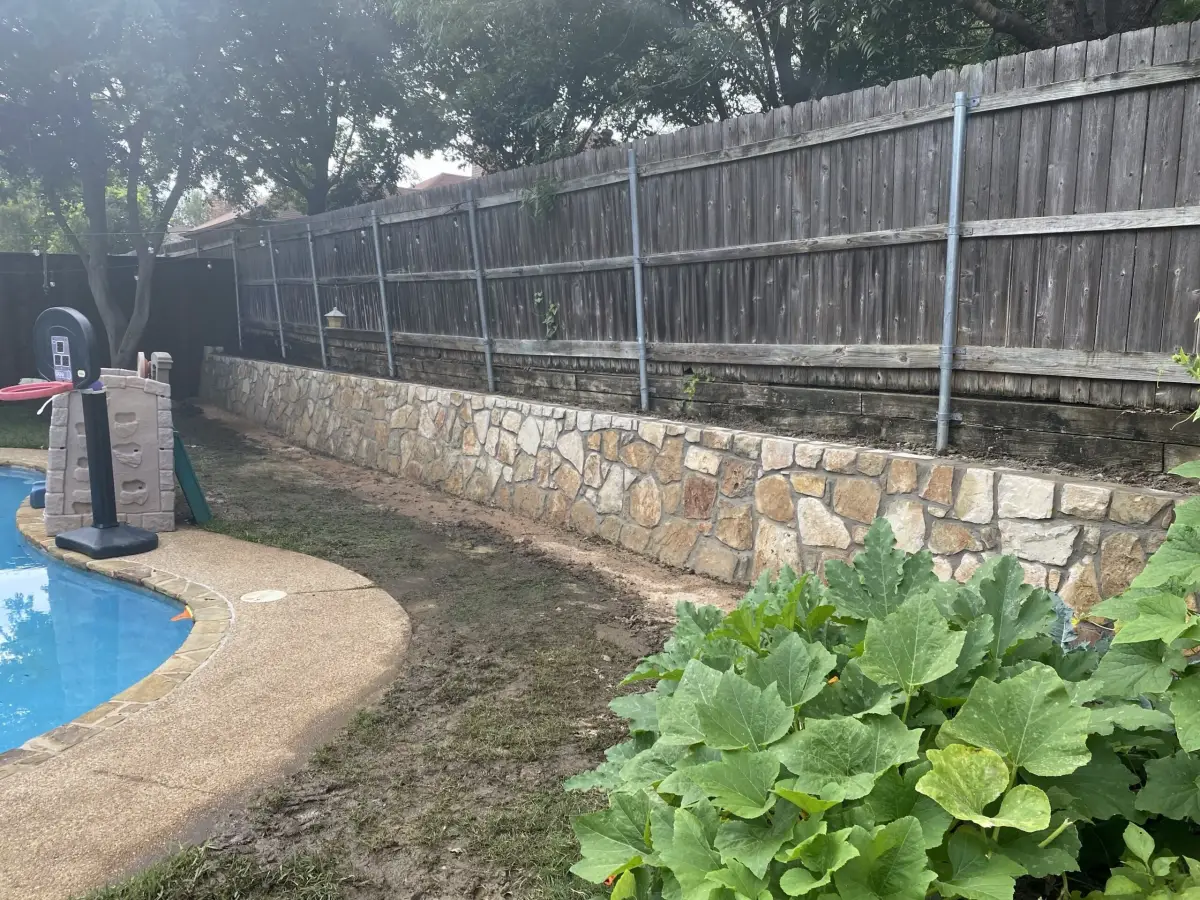
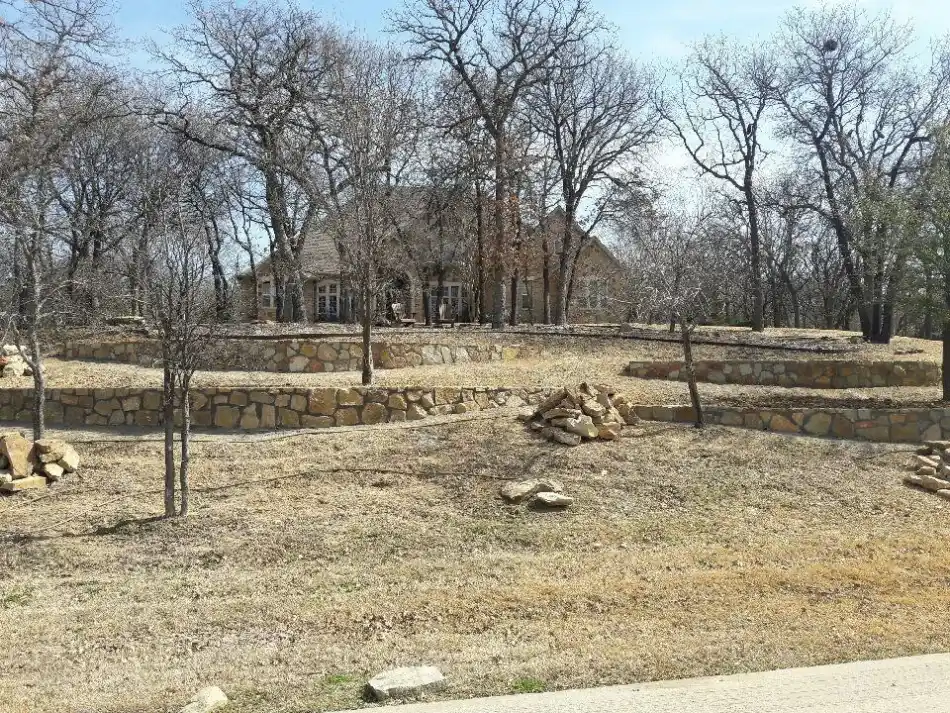
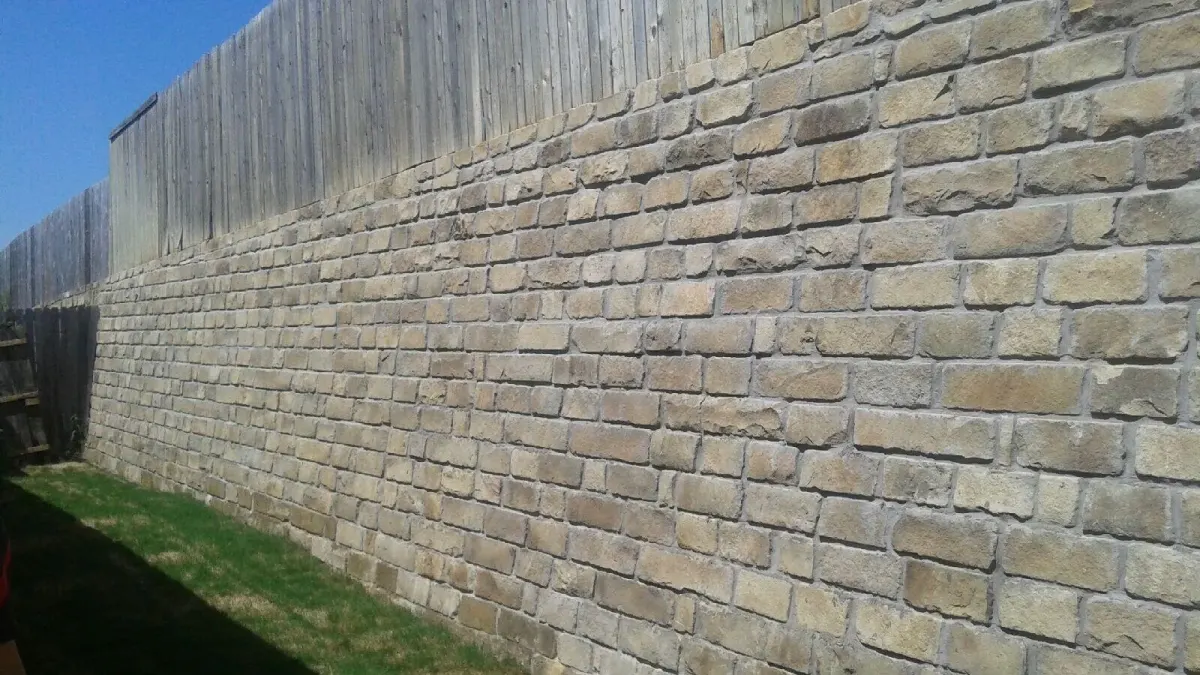
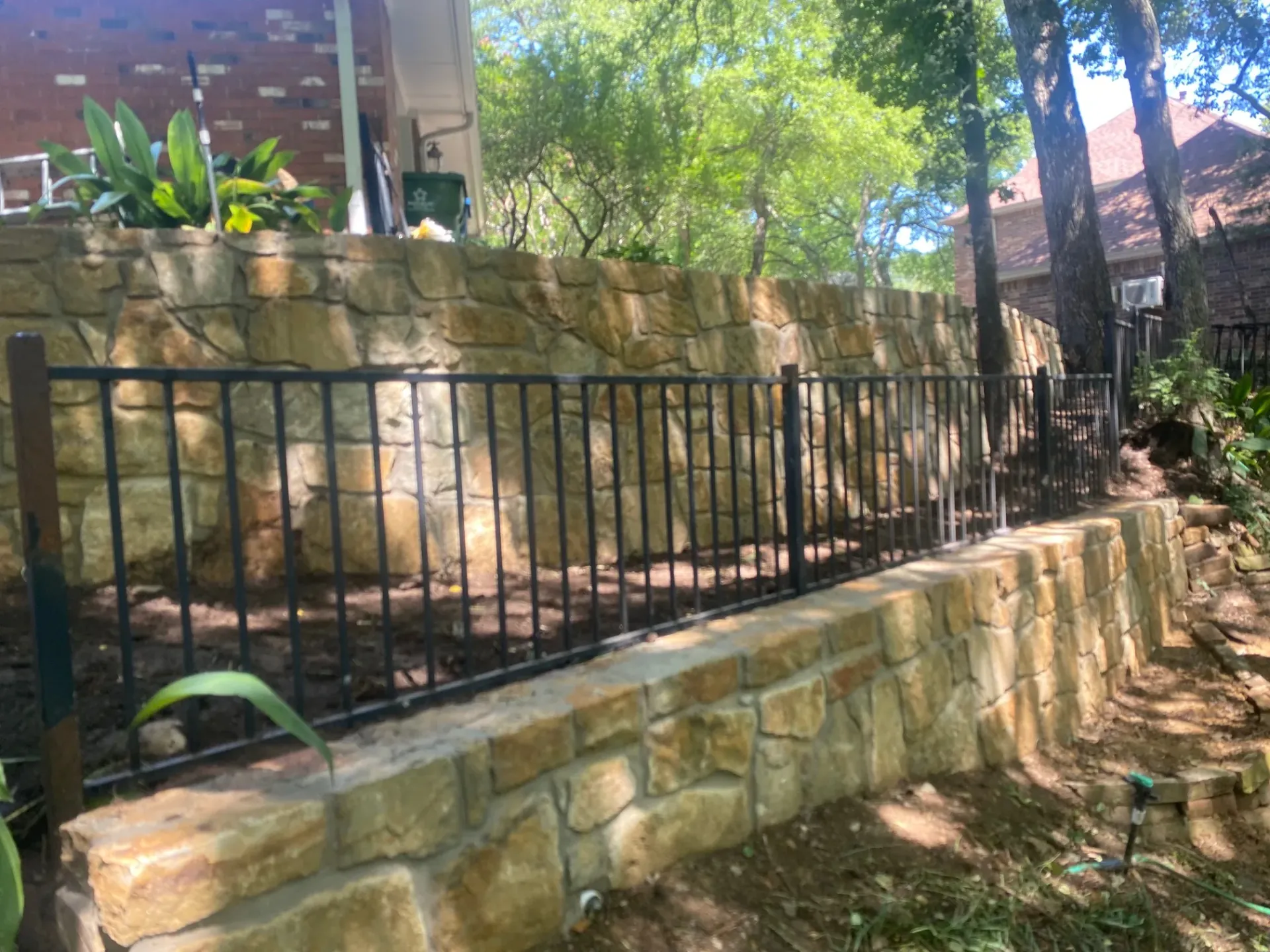
Recent Retaining Wall Services Projects
A selection of completed projects near Hurst and across the Dallas–Fort Worth metroplex.


Quick answer
How much does a retaining wall replacement cost in Hurst?
Cost depends on wall height, length, material, and whether drainage or tiering is needed, so JCL prices each Hurst project after an on-site estimate rather than a phone quote. Once that price is set, it's guaranteed — the number quoted at the estimate is the number on the invoice, with no change orders added mid-build.
Frequently Asked Questions
Common questions from Hurst homeowners.
How much does a retaining wall replacement cost in Hurst?
Cost depends on wall height, length, material, and whether drainage or tiering is needed, so JCL prices each Hurst project after an on-site estimate rather than a phone quote. Once that price is set, it's guaranteed — the number quoted at the estimate is the number on the invoice, with no change orders added mid-build.
How long does a retaining wall project take from estimate to completion?
Timeline depends on the scope — a straightforward replacement moves faster than a tiered system with new drainage — but the estimate itself is scheduled same-day or next-day for Hurst addresses. JCL walks through the full timeline for your specific wall during that visit, since removal, base prep, and rebuild all factor into how long the job takes.
Do I need a permit for a retaining wall in Hurst or Tarrant County?
Yes, most new or replacement retaining wall work in Hurst and Tarrant County requires a permit, and JCL obtains and manages that permit as part of the project rather than leaving it to the homeowner. That includes any inspections tied to the permit, so the paperwork isn't something a Hurst property owner has to track down separately.
Can my railroad-tie wall be repaired, or does it need full replacement?
A railroad-tie wall that's leaning, rotting, or has separated ties usually needs full replacement rather than a patch, since the wood itself has degraded and the clay behind it keeps pushing. A wall that's structurally sound but has one damaged section may be a candidate for a partial repair — JCL determines which during the on-site estimate.
Which material holds up best against Tarrant County's clay soil?
Milsap stone, Granbury stone, concrete block, and poured concrete all hold up in Tarrant County's clay when the wall is engineered correctly, so the choice usually comes down to the look, budget, and height of the wall rather than one material being inherently better. What matters more than the material is the drainage and base work behind it.
How do I know if I need a tiered wall system instead of a single wall?
A single wall usually works for a shorter slope or a straightforward retaining need, while a tiered system spreads the load across multiple shorter walls on a steeper grade — reducing pressure on any one wall. JCL evaluates the slope and drainage pattern on-site in Hurst before recommending which approach fits the property.
Does JCL work outside Hurst, in cities like Bedford or North Richland Hills?
Yes — JCL serves Hurst along with Bedford, Colleyville, Euless, Fort Worth, and North Richland Hills, using the same estimate-to-build process across all of them. Being based a short distance away in Colleyville keeps scheduling consistent whether the wall is in Hurst or a neighboring city.
What happens during the free estimate visit?
JCL looks at the existing wall or slope, checks the drainage pattern, and measures the scope of what needs to be rebuilt, then provides pricing on-site — usually the same day or the next. There's no cost for the visit, and the pricing given at that point is what holds through the build.
Our Other Services
Retaining Wall Services and Pool Removal across the Dallas–Fort Worth metroplex.
About Our Retaining Wall Services Program
Recent Retaining Wall Projects Near Hurst
Real completed jobs from our crews in and around Hurst, with photos and project details.