5,000+
Completed retaining wall and pool-removal projects
JCL has completed more than 5,000 projects for DFW property owners since its founding in 2006.

JCL Landscape Services
Leaning, bulging or collapsing wall? JCL finds why it failed, fixes the drainage and repairs or rebuilds it. 5-year warranty. Free on-site estimate.
Get Your Free Estimate
 4.9out of 5 on Google Reviewson Google116 Google reviews

A retaining wall rarely fails overnight. It leans a little further each wet season, the face starts to belly, or a crack that was hairline last summer is now plainly wider. By the time the fence on top tips with it, the wall is no longer holding the slope — the slope is pushing the wall.
JCL Landscape Services repairs, replaces and builds retaining walls across Dallas–Fort Worth. When a wall is failing, General Manager Robert Avalos finds out why before anyone quotes a fix, then repairs or rebuilds it so the same failure does not come back.
Built for: Homeowner whose retaining wall is leaning, bulging, cracking or partly collapsed
Weathered stone and faded ties are cosmetic. Movement is not. Stand at one end and sight down the wall: a face that now tilts past vertical, or swells outward in the middle, is being pushed over by the soil it was built to hold.
On block and stone walls, look for a horizontal crack that grows from one year to the next, a corner pulling away from the run beside it, or courses that no longer sit in a straight line. Any crack that reopens after every heavy rain is the wall telling you it is still moving.
On railroad tie and timber walls, push a screwdriver into a tie near the base. If it sinks in, the wood is rotting from the buried face outward. Gaps opening between ties, spikes backing out and a top course creeping forward all point the same way.
Two signs show up away from the wall itself. A fence that tips along one stretch is often riding a wall that is moving underneath it. And ground at the base that stays soggy days after the rest of the yard has dried means the drainage behind the wall has already given out.
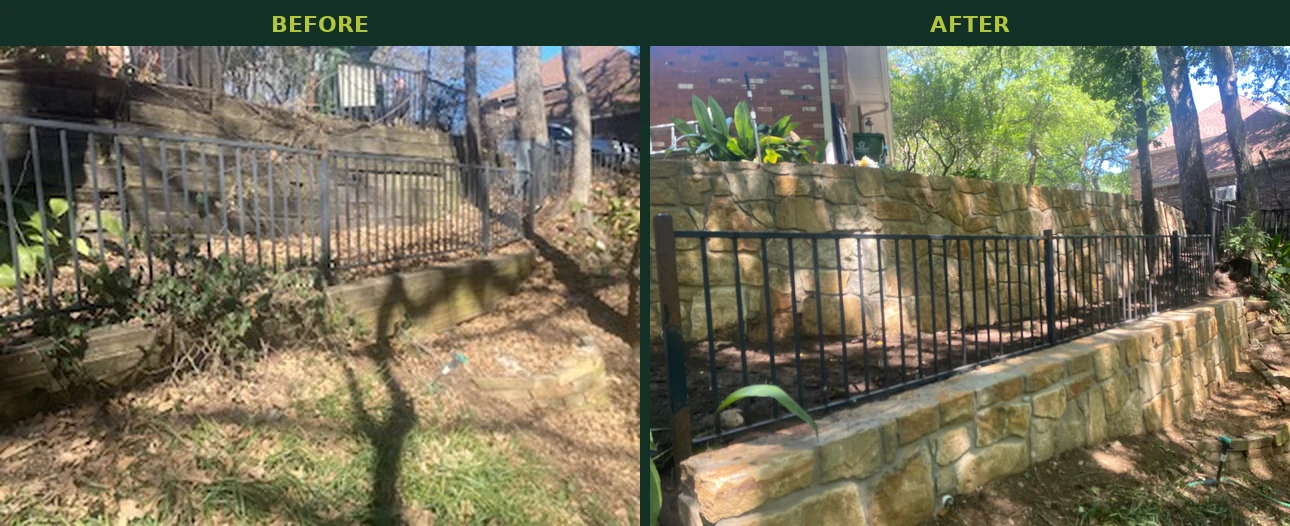
Most failing walls we are called to were not beaten by the weight of the soil. They were beaten by water. With no clean gravel and no way out for the water behind them, every storm loads the wall with pressure it was never built to carry.
DFW clay makes that worse. It swells when it soaks up rain and shrinks back in a drought, so the ground behind the wall pushes, relaxes and pushes again every season. A wall not engineered for that cycle is worked loose a little at a time.
The stone itself is seldom the part that gave way. Far more often the base under it settled, the footing was undersized, or a timber wall simply reached the end of its life — tie walls typically last somewhere between fifteen and twenty-five years. Walls built from two materials, such as block on top of cross ties, tend to split right at the join, because the two never move together.
Every repair starts with a free on-site estimate, usually the same day or the next. Robert walks the wall with you and reads the ground around it: the soil, the grades, where water runs and where it collects, and exactly which sections have moved.
A useful assessment points to the failing sections and explains why they failed. It does not default to tearing out the whole structure. You leave with a guaranteed price for the approach that will actually hold, and the number you approve is the number on the final invoice.
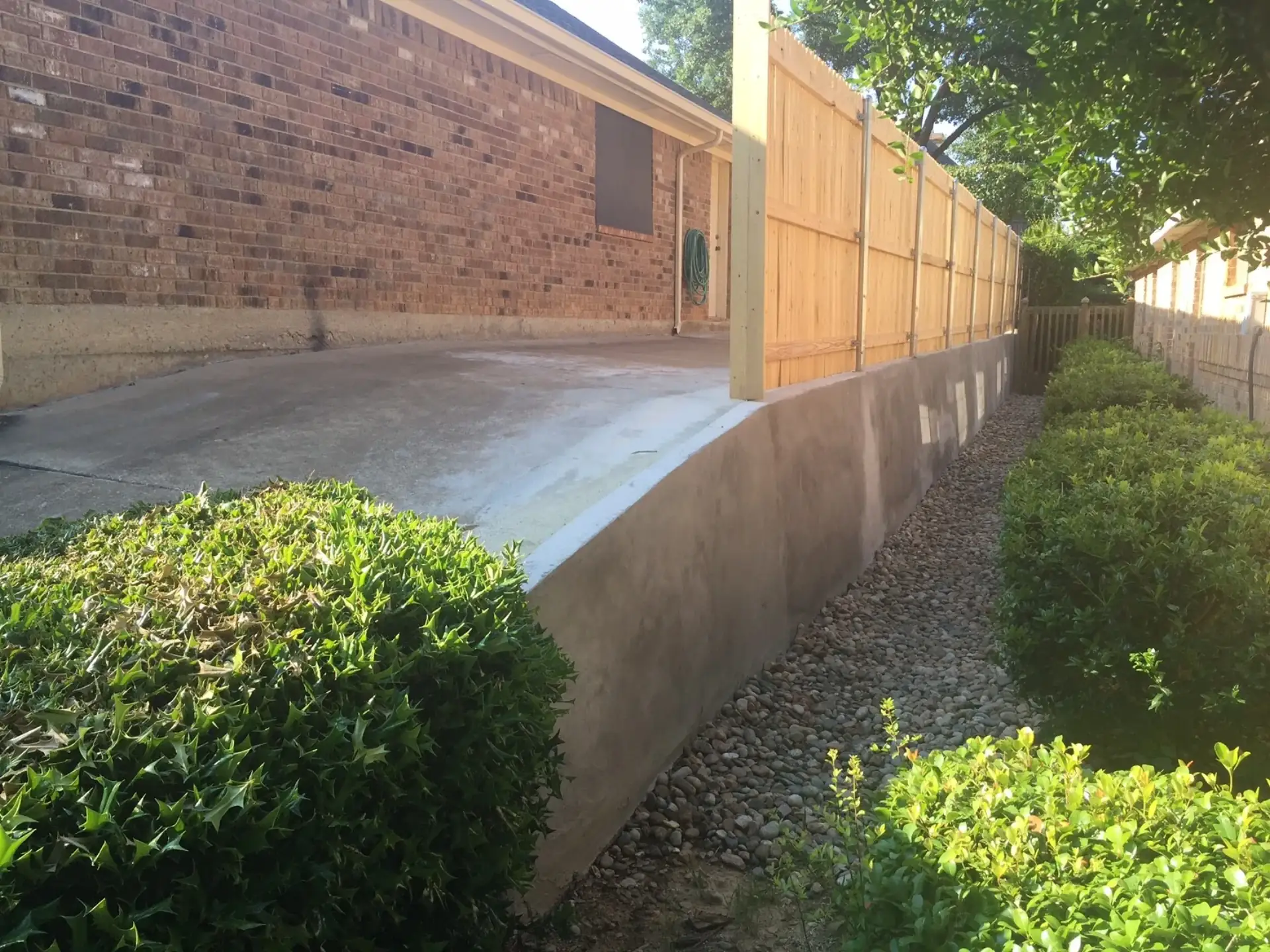
The repair goes after the cause first. Drainage and grading are corrected before a single course goes back up, because rebuilding the face over the same trapped water only restarts the clock.
Failed sections come down along with the rotted ties, old footings and saturated backfill behind them. The new base is dug out, compacted and set into undisturbed ground — on many failed walls, that base is the part the original builder skipped.
The wall goes back up to a proper batter with clean aggregate behind it, compacted in lifts, and a route for water to escape through weep points or a perforated drain at the base. Taller block walls get geo-grid where the height calls for it. JCL engineers the drainage behind every wall, and pulls the permits and utility locates the job needs.
Some walls can be repaired in part. If the failure is confined to one stretch and the rest of the wall is sound and built from the same material, replacing only that section can be the right call. Robert will tell you when that is the case.
A wall that is leaning along its length, bulging or partly collapsed is a different story. Straightening one in place almost never lasts, and patching it again usually just moves the next failure a few feet down the line. That is when JCL rebuilds part or all of the wall instead.
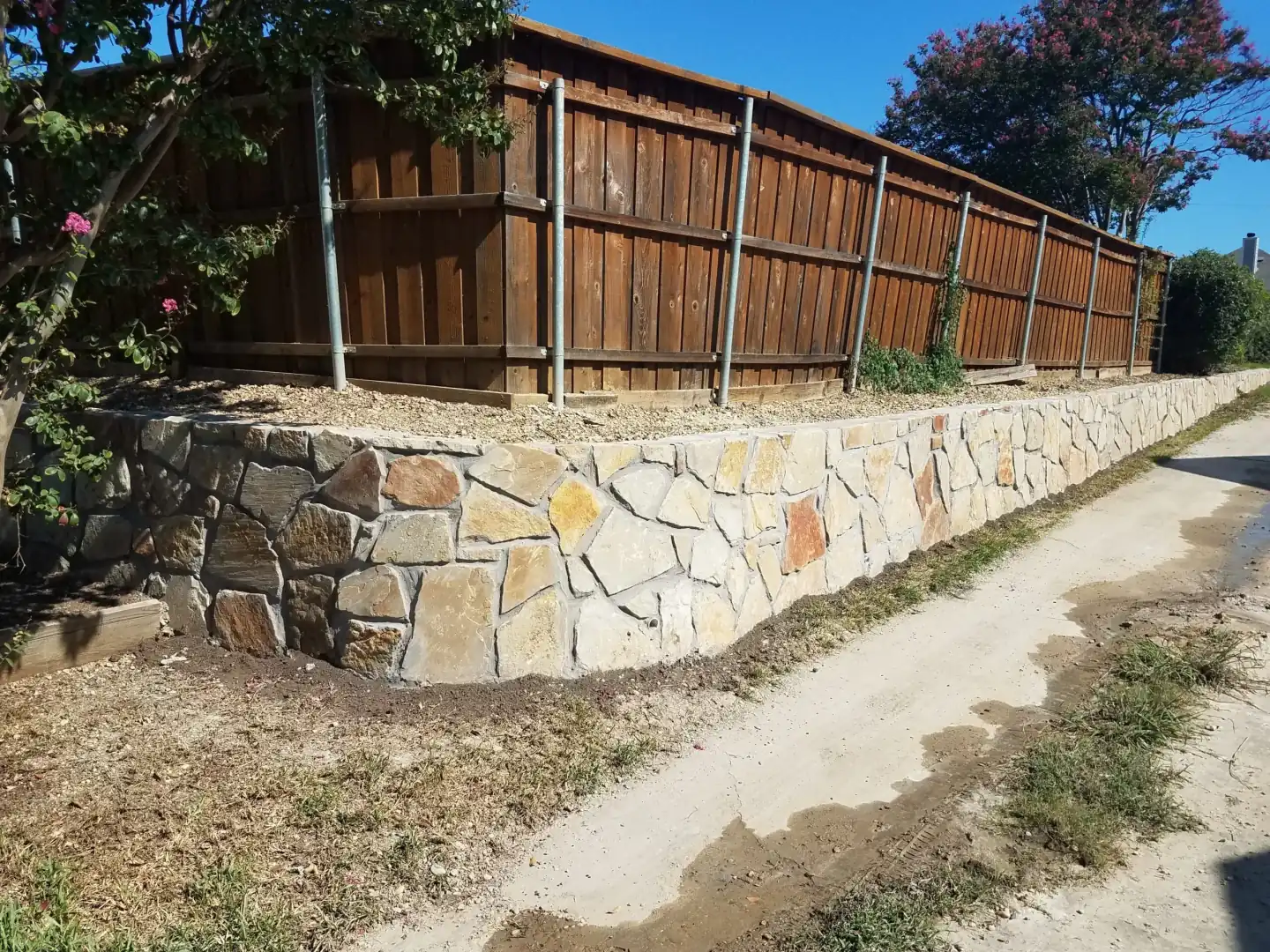
A rebuild does not always mean starting from new material. Sound dry-stacked stone can often be cleaned, sorted and relaid on a new base, which keeps the look you have and usually costs less. Where the old material is past saving, such as rotted ties, crumbling concrete or failed block, the new wall goes up in poured concrete, concrete block, or Milsap or Granbury stone.

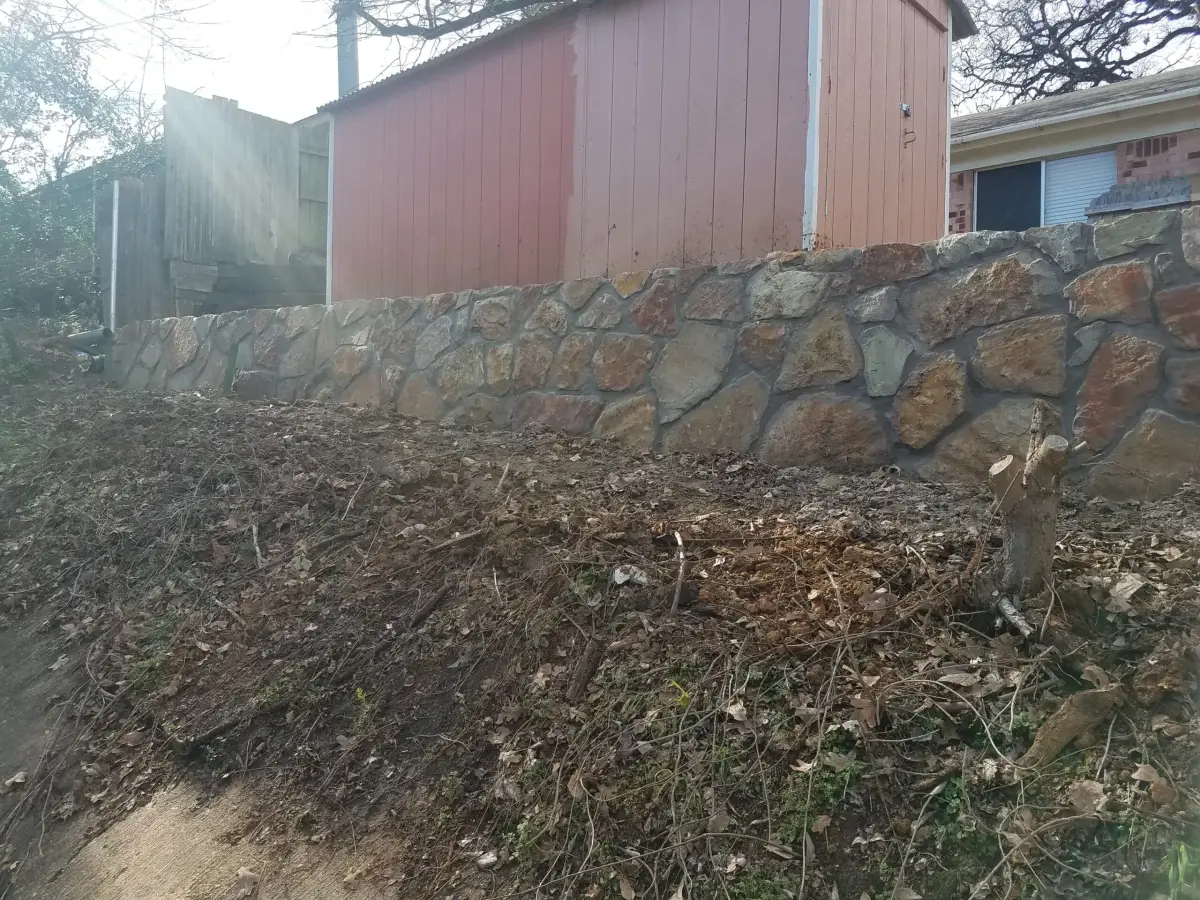
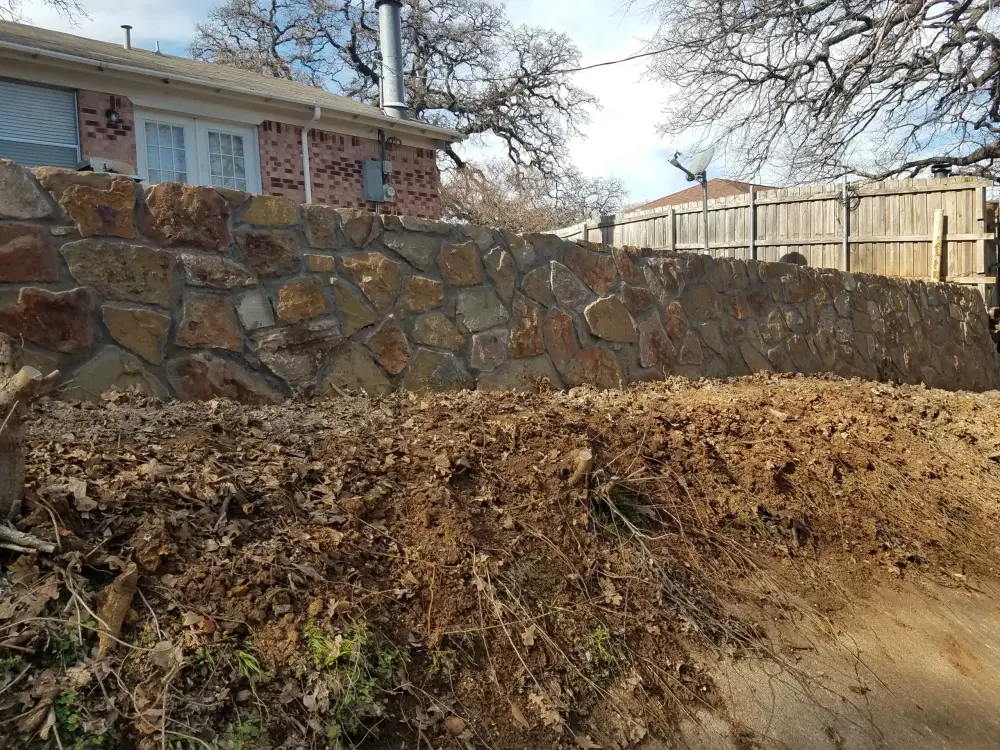
In Carrollton, a dry-stacked stone wall had bellied out and lost its line, with water staining running down the face. The stone was fine; the base under it was not. JCL took it down course by course and rebuilt it with its own stone on a new base.
In Colleyville, a wall of cinder block stacked on cross ties had been patched for years while the fence above it leaned further out. Robert's call was that one more patch would only push the failure along, so the block, ties, old footings and failed backfill all came out and a new Milsap wall went in.
In Dallas, a railroad tie wall had rotted, bowed outward and begun dragging the fence line with it; JCL replaced it in Milsap with drainage aggregate behind. In Argyle, rotted timber tiers had let the planting benches wash out, and the new stone wall sits on a base founded in undisturbed ground.
JCL has completed more than 5,000 projects across Dallas–Fort Worth since it was founded in 2006, and Robert still oversees each one from the first walkthrough to the last. Every wall JCL builds or replaces carries a 5-year workmanship warranty.
If your wall is leaning, bulging or coming apart, call (817) 716-3095 or request a free estimate below. You will get a straight answer on whether it needs a repair or a rebuild, and a price that will not change.
What sets JCL Landscape Services apart.
JCL does two things — retaining walls and pool removal — and has done them exclusively since 2006. You get nearly two decades of focused expertise, not a sideline service squeezed in between lawn care appointments.
General Manager Robert Avalos personally oversees every job from estimate to final walkthrough. There is no hand-off to a foreman you've never met — one person owns the outcome.
The price quoted before work begins is the price on the final invoice. JCL never adds charges mid-project — a commitment backed in writing before a single shovel hits the ground.
JCL obtains and manages every permit required — for both retaining wall and pool-removal projects — so you never have to navigate municipal requirements on your own.
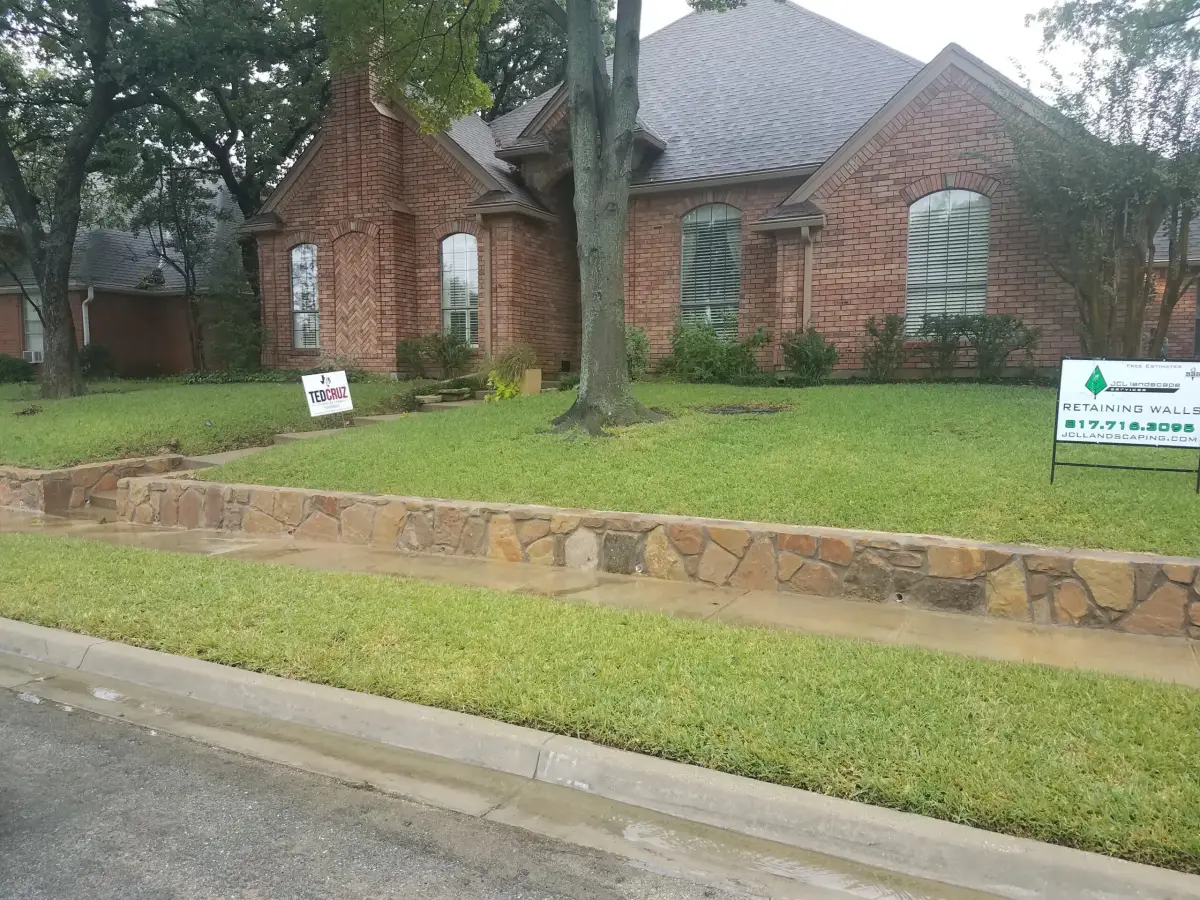
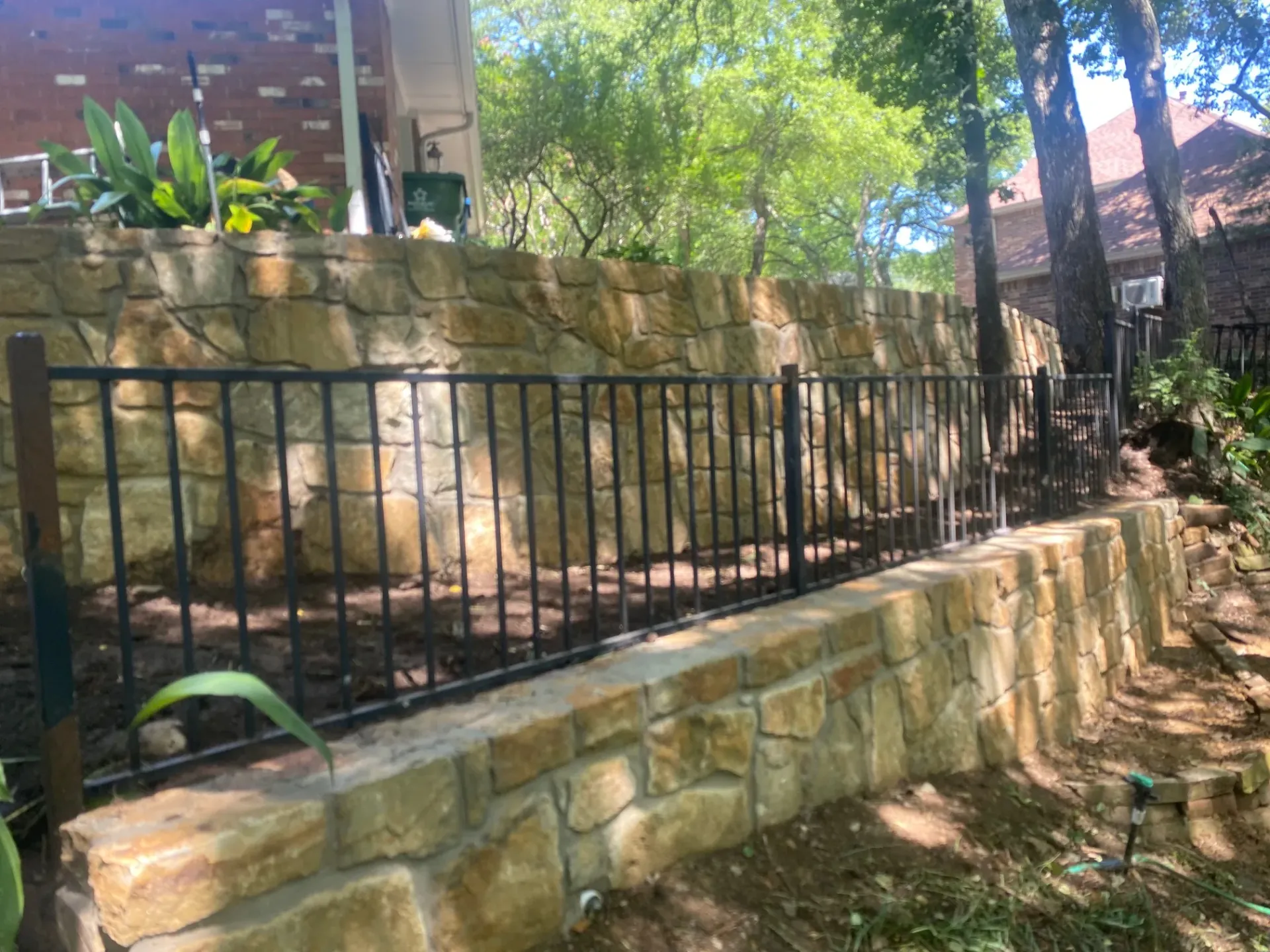
Real numbers from real projects.
5,000+
JCL has completed more than 5,000 projects for DFW property owners since its founding in 2006.
4.9 stars
JCL's 4.9-star Google rating reflects consistent customer satisfaction across retaining wall and pool-removal projects throughout DFW.
A+
JCL Landscape Services holds an A+ rating with the Better Business Bureau, reflecting its commitment to transparent pricing and quality workmanship.
Since 2006
JCL has been in continuous operation since 2006 — one of the longest-tenured retaining wall specialists in the DFW market.
A selection of completed projects from across the Dallas–Fort Worth metroplex.




 4.9out of 5 on Google Reviewson Google116 Google reviews
Meet the General Manager
General Manager
Robert Avalos has led JCL Landscape Services since its founding in 2006, personally managing every retaining wall and pool-removal project from the free on-site estimate through the final walkthrough. His hands-on involvement means every DFW homeowner has a single, accountable point of contact — not a rotating crew of project managers.
Quick answer
Rarely in a way that lasts. A wall that has leaned has usually lost its base or its drainage, so pushing the face back leaves the cause in place. JCL corrects the base and drainage and rebuilds the leaning stretch instead.
Common questions about Retaining Wall Repair.
Rarely in a way that lasts. A wall that has leaned has usually lost its base or its drainage, so pushing the face back leaves the cause in place. JCL corrects the base and drainage and rebuilds the leaning stretch instead.
Sometimes. If the failure is limited to one stretch and the rest of the wall is sound and the same material, a section repair can hold. If the whole run is moving, a partial fix only adds another seam, and Robert will tell you so at the estimate.
Often, if it is dry-stacked and in good condition. The stone is taken down, cleaned and sorted, then relaid on a new compacted base with drainage behind it. Mortared walls are harder to salvage.
Because the patch fixed the face and left the cause behind it. Trapped water and swelling clay keep pushing until the base and drainage are corrected, and the next crack usually opens right beside the last repair.
It depends on the wall's height, where it sits and your city's rules, and a rebuild is not always treated the same as new construction. JCL finds out what your job needs and obtains and manages the permits for you.
It depends on how much of the wall has failed, its height and length, the material, access and how much demolition and haul-off are involved. JCL prices each wall after a free on-site estimate, and the quote is guaranteed with no change orders.
JCL is a Dallas–Fort Worth specialist in two services: retaining walls (new construction, failing-wall replacement, and tiered systems) and residential pool removal with full site restoration. We are not a general landscaper — we focus on doing these two things well.
JCL serves 44 communities across the Dallas–Fort Worth metroplex from its base in Colleyville, including Plano, Frisco, Southlake, Arlington, Fort Worth, Dallas, McKinney, and the surrounding suburbs.
Yes. JCL provides free on-site estimates, usually the same day or the next. The price we quote is guaranteed — there are no change-order surprises once work begins.
Retaining Wall Services and Pool Removal across the Dallas–Fort Worth metroplex.
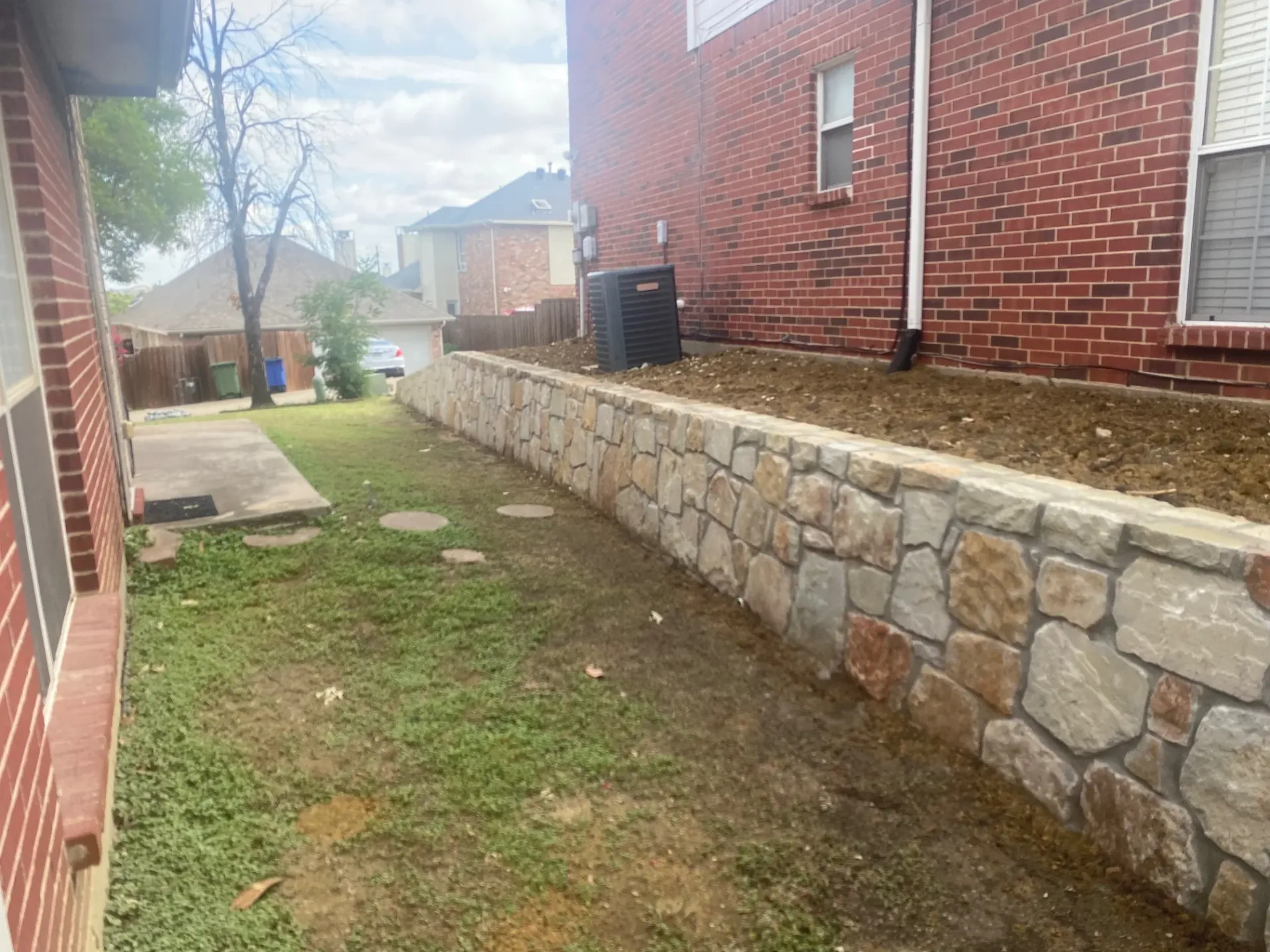
New retaining walls, failing-wall replacement, and tiered systems for DFW homes — engineered for North Texas clay soil.
Explore Retaining Wall Services →
Complete and partial in-ground pool demolition with full site restoration — a clean, usable yard.
Explore Pool Removal →Retaining Wall Repair across 44 communities in the Dallas–Fort Worth area — each with its own page below.
Planning help from our team — materials, costs, and how the work gets done.